by Miriam Hara | Jul 29, 2025 | Agency, Business Success

Every business has a story. Which means that every entrepreneur has their story. This six-part series is mine. In these blogs, I’ll walk through what matters most; from the big “why” to the daily decisions, and how it all comes together to create a brand with staying power.
When you’re an entrepreneur, there is a fine line between your very personal brand and that of the company you have founded. Sometimes the lines just get blurred. It goes without saying, there’s a symbiotic relationship between the two. It comes down to leadership and how that leader drives the organization and team members each and every day. More on that later.
In the Beginning…
As with most big decisions in life, it all starts with a question. Entrepreneurship isn’t a single moment of inspiration.
It’s a series of pivots, doubts, and the kind of clarity that only comes from asking tough questions.
Early on, I realized that finding my “what” wasn’t just about naming a service. It was about defining a promise for the company I was establishing… an extension of myself. It was simple: What do I deliver that actually matters? Not just what I do, but what I bring to clients, to brands, to the noisy, fast-moving world of marketing. That is what I wanted for my company…my organization…and for my team to live by.
Owning the “What”
What I deliver is more than strategy or creativity. It’s clarity, boldness, and an unshakeable commitment to outcomes that matter. My role isn’t just to make brands look good. It’s to help them find their voice, claim their space, and make an impact specially when the stakes are high and the landscape is complex. That’s what I bring to the table, and what my company is defined by. I remember when I first stepped out on my own, the temptation was to cast the widest net. I took on every project and brief. I could do this because I realized early on that growth doesn’t come from saying yes to everything… it comes from exceeding the brief. It comes from owning your difference and applying to however big or small the mandate is. Subsequently I also realized that saying no was also right, when what I deliver and how I deliver it isn’t aligned with the ask.
So what exactly is my difference?
“I help brands in complex, competitive spaces own their voice and their market through strategic clarity, creative courage, and a drive for measurable results.”
Why the “What” Matters
Brands always want to get the most attention. But beyond that, they want and need traction. Brands need to know who they are, what makes them different, and how to turn that difference into growth. My “what” is about giving them that edge, not with quick fixes, but with honest, sometimes uncomfortable, always strategic conversations. That is the only way forward towards building the foundation that lets a brand adapt to the newest trends, stand out, and keep moving forward, no matter how crowded the market gets.
The Heart of My Entrepreneurial Journey
Looking back, getting clear on what I deliver was the moment my entrepreneurial story really began. It’s what gave me the confidence to say no when it mattered, and the drive to say yes to challenges that scared me (in the best way possible). The “what” is never static. It grows as you do. But once you’ve found it, you have something solid to stand on. It’s the north star that guides everything else.
In my next post, I’ll dig into the “who”: the clients, teams, and communities I serve, and why their success is the fuel behind everything I do.
by Tara Ford | Jun 10, 2025 | Advertising, Business Success, Marketing

Many gamers across the land celebrated last week when the Nintendo Switch 2 launched on June 5th. This marked an exciting milestone in the gaming world. From a marketing perspective, it’s important to understand the demographic of these gamers and the potential of advertising in their universe.
If you’re still picturing gamers as teenagers holed up in their parents’ basements, it’s time for a hard reset. These days, gamers are everywhere, and they’re not just playing, they’re paying attention. This has led popular gaming platforms like Sony’s PlayStation, Microsoft’s Xbox and Nintendo’s Switch 2 to showcasing fully immersive worlds where brands can play too. For example, big brands such as Nike, Ford and Monster Energy appear prominently in popular video games.
Microsoft is also levelling up by actively exploring a more non-intrusive advertising style by integrating in-game branded billboards and items that naturally blend into game environments. Additionally, they are testing ad-supported cloud gaming where players watch short ads to gain free access. Sony prefers to limit advertising to the PlayStation Store and dashboard, avoiding in-game ads. Nintendo however, maintains the nostalgic ad-free experience, rarely allowing product placement or traditional advertising.
Together, these platforms house around 350 million active users globally, contributing to a worldwide gaming audience of over 3 billion players. And guess who’s driving this growth? Millennials and Gen Z, those elusive, ad-resistant audiences who also happen to be aged 11 to 42.
So, should gaming be on your media plan? The answer is heck yes, and here’s why:
- Epic-Scale Engagement
Gamers spend hours immersed in digital worlds, making gaming one of the most engaging entertainment mediums today. This deep engagement results in stronger brand recall and emotional connections compared to more passive media like television.
- Total Recall Mode: Brand Edition
Product placements and branded content positioned strategically into gameplay can increase brand recall by up to 25%. This is especially true when brands become part of the game’s environment.
- Glitch the System: Get Where Others Can’t
Gaming reaches a sought-after demographic of younger, tech-savvy consumers – especially Gen Z and Millennials. This is a key venue as this demographic is often resistant to traditional ads. That said, the gaming audience is broadening: 25-30% of gamers are now aged 50 and older, reflecting its expanding appeal.
- Power-Up Your Creativity
Games offer interactive storytelling, allowing brands to become part of the narrative. This creates memorable, positive brand experiences that far surpass the more traditional static advertisement.
- Multiplayer Mode: All Systems Go
Gaming today is deeply connected with streaming platforms like Twitch, YouTube, social media and highly popular e-sports. A single branded activation can amplify across multiple channels, dramatically increasing reach without extra costs.
- Precision Mode: Target Locked
Platforms like PlayStation Network, Steam and other mobile platforms, give marketers smart data to target the right players and track whats working in real time.
✅ Game On
Gaming checks all the boxes traditional marketing often misses. It’s interactive, immersive, and hits your audience where they’re most engaged with controllers in hand and attention fully locked in. If you’re looking for a fresh way to connect with Millennials, Gen Z, and beyond, gaming isn’t just a new approach it’s a great way for brands to level up.
by Miriam Hara | Mar 28, 2025 | Business Success, Marketing
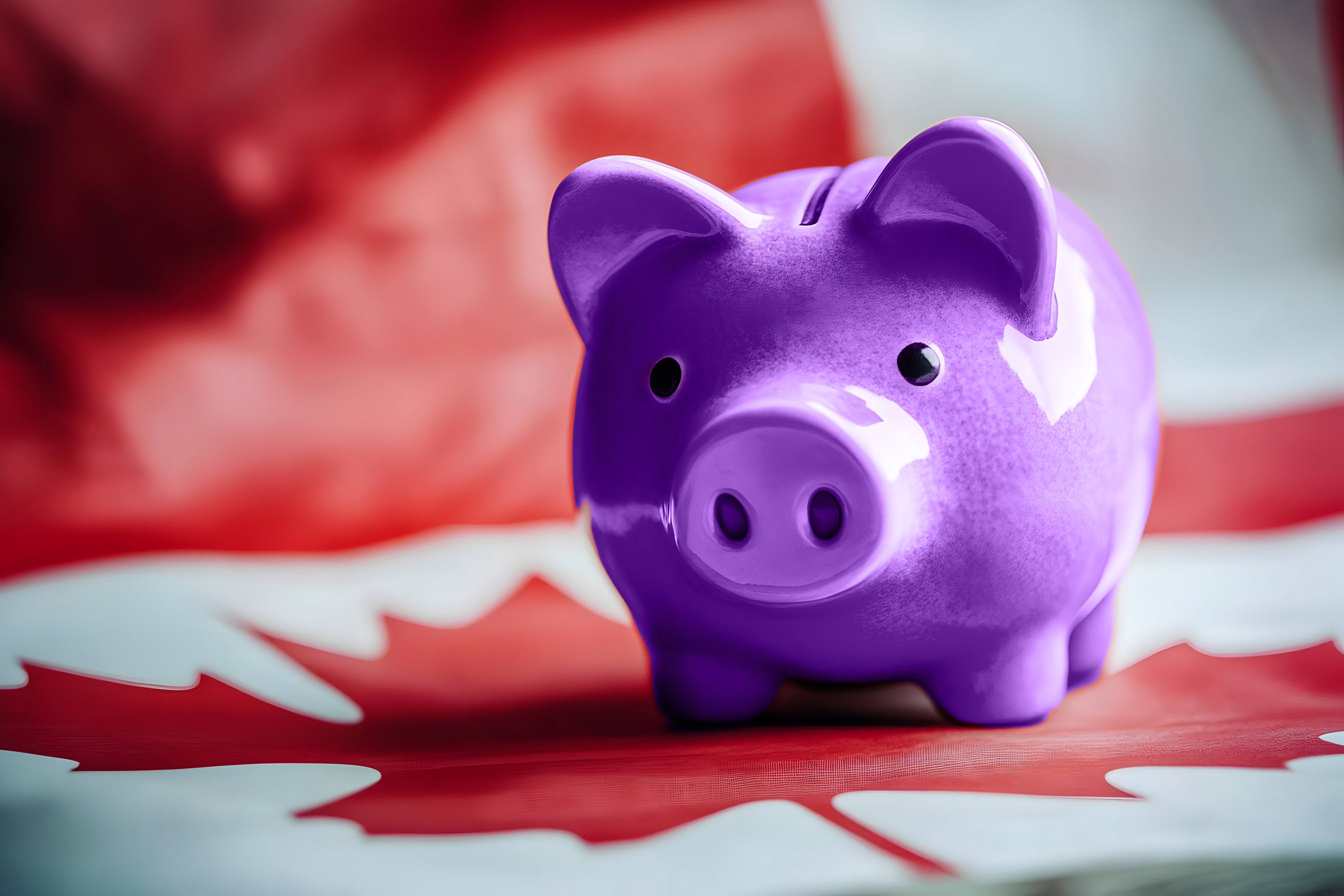
Canada Local, buying into it is trending, imagine that! That’s one silver lining in all this chaos and craziness with our southern neighbour. Canadians are finally waking up to the power of buying Canadian. We’ve always had the resources, the talent, and the ingenuity to thrive. But for too long, “buying Canadian” has been more of an afterthought than a movement. That changes now. Because when global forces shake us, we don’t crumble, we double down.
Buy Canada Local: Understanding the various Maple Leaf Labels
In the frenzy of supporting the Canadian economy and Canadian businesses, let’s get clear on what’s actually made in Canada. Those tiny labels on the packaging? They matter. Here’s what they really mean:
-
“Product of Canada”: Think more than Maple Syrup Ontario or BC Wines. Any home grown local business falls into this category, artisans, entrepreneurs and that are regionally, provincially or nationally minded, in both in packaged goods and business to business. You can’t get more Canadian than this. This means 98% or more of the product’s total direct costs, including ingredients and processing, originate from Canada. If you want to truly support Canadian farmers, manufacturers, and suppliers, this is the label to look for.
-
“Made in Canada”: A little looser. The product was manufactured or processed here, but the ingredients? They could be from anywhere. However, at least 51% of the total direct costs must be Canadian. A step in the right direction, but not quite homegrown.
-
“Prepared in Canada”: The most flexible of the claims. The product was assembled or cooked in Canada, but most of its components were sourced globally, including the USA. But it also means that being prepared here… provides and optimizes Canadian jobs.
Bottom line? If you want your dollars to matter and fuel Canadian businesses, “Product of Canada” is your best bet.
The Brain Power Behind the Maple Leaf
Canada can take a page of the hundreds of individual self help and validation books! As a country we really don’t value what we are all about, looking always for validation externally. Our humble-nous has been so ingrained we’ve lost the ability to recognize our true strength and value.
The real problem? We haven’t fully embraced ourselves yet. And that’s where the real identity crisis begins.
We are the first to acknowledge our worth in terms of raw materials and of course, natural beauty. But Canada is a powerhouse of innovation, creativity, and entrepreneurial grit.
Think Shopify, a homegrown e-commerce titan that’s revolutionizing online retail. Or DeepMind, the AI powerhouse with Canadian researchers driving global advancements. Even Cirque du Soleil, an international entertainment phenomenon, was born out of Canadian creativity.
It goes without saying our sense of humour is second to none, having provided millions of people with the best laughs with the most awesome comedians.
From AI and biotech to sustainable manufacturing and entertainment, we have been at the forefront of some of the most groundbreaking industries in the world. But unlike other nations that shout about their accomplishments, Canada tends to shrug it off and blush.
It’s time to change that.
When Buy Canada Local… Really isn’t
Think about it. Some of our most iconic brands we’ve all grew up with, aren’t actually Canadian-owned anymore.
Hudson’s Bay Company: A Historical Past owned by the USA
Founded in 1670, Hudson’s Bay Company (HBC) is North America’s oldest company. It practically wrote the book on Canadian commerce. But in 2006, American businessman Jerry Zucker acquired HBC for $1.1 billion. Two years later, NRDC Equity Partners, another American firm, took over. It may still feels Canadian. But its ownership says otherwise.
Tim Hortons: More American Than You Think
Tim Hortons—the brand that fuels our hockey rinks and morning commutes hasn’t been fully Canadian for years. In 2014, it merged with Burger King under Restaurant Brands International (RBI), a Canadian-American multinational. Yes, RBI is headquartered in Toronto, but its corporate roots run deep into American soil.
So, next time you grab that double-double, know that while the nostalgia is ours, the ownership isn’t.
Buy Canada Local Your Purchase Statement
Every dollar spent on Canadian products is a direct investment in our economy. It creates jobs. It sustains industries. It ensures that the families who grow, manufacture, and innovate here continue to thrive. And in a time when economic uncertainty looms large, that kind of impact matters.
This isn’t about waving flags or blind patriotism. It’s about making choices that keep our economy strong, our communities thriving, and our identity intact.
The Silver Lining
Trump’s tariffs may have set off alarm bells, but they also sparked something else: realization. We don’t need to rely so heavily on imports. We don’t need to play by the rules of an unpredictable trade partner.
What we do need? To recognize that Canada has its own rhythm, its own strength, its own identity. We’re not just an add-on in the global economy. We’re a force.
So, Elbows Up. Choose Canadian. We all have a part in making this time a turning point in Canada’s history.
by Miriam Hara | Jan 28, 2025 | Agency, Branding, Business Success, Creative, Marketing

If there is one thing that has remained with the test of time in the brand marketing world, it is ‘The Brief’. It has been the ‘one document’ that bridges streamlined information about the brand between brand marketers and creative marketing agencies since… or even before madmen.
It’s in the Brief.
The Brief is about providing the right information, so that it can create and offer up the best possible solution for the brand objective at hand and deliver on the brand strategies it stipulated. It provides the agency with the “objective reference” to assess their creative concepts and innovations against.
It’s the Brief that Counts.
Regardless of the tools that marketers have at their disposal to reach their audiences and to measure the effectiveness of their tactics, It’s the brief that counts. In today’s business world overflowing with marketing tools, data analytics, and performance metrics and, let’s face it, information overload.
As a result of all these metrics there is an undeniable pressure for corporations, brand marketers and agencies to create ideas that deliver on specific KPIs and of course, ROIs. And the only way to achieve this is in the creation of a good brief.
It’s all about The Brief.
What constitutes a good brief is simple, but it isn’t easy to create by any stretch of the imagination. A good brief is based on solid strategic thinking, providing the foundational work for the agency to pick up the baton and run with in.
What’s in The Brief.
Over the decades of running this agency, both my team and myself have had the distinct privilege of attending numerous strategic sessions for many brands… providing our agency an additional vision of the brand. But that is not always the case. Often, more than I would like, we are in a competitive situation where every word and subtlety is weighed heavily. A well written brief provides strategic clarity that enables the agency to deliver on the objectives and perhaps even exceed expectations based on the defined parameters that is set within it.
Where’s the Brief?
When we receive a mandate, this is the first question my teams always ask… Because every great campaign starts with one thing: a great brief.
by Miriam Hara | Dec 3, 2024 | Advertising, Business Success, Communications, Marketing
Are Greeting Cards the Next Dodo Bird?
In 2024…
…with our inboxes overflowing and social media delivering instant “Happy Holidays” posts, is this the year paper greeting cards join Tupperware and the dodo bird in history’s archive of nostalgia? Tupperware, once an icon of kitchen innovation, now on the brink of extinction. It’s a fate sealed for so many beloved traditions and items of yesteryear. And it raises the question: Are greeting cards next?
Every year…
…as the holiday season rolls around, I find myself wondering the same thing: Are Christmas and seasonal greeting cards becoming a thing of the past? For as long as I can remember, holiday greeting cards have been a cherished tradition in the creative, marketing, and advertising world. Every year, my creative team would push the envelope (pun intended) to show just how imaginative we could be.
I’d like to think…
…our clients, partners, and contacts looked forward to seeing what we’d dream up, year after year. Or is this wishful thinking? In the recent past, every year November rolled around, the 3H Team had a lively internal debate. Should we embrace digital greetings to showcase our tech-savvy side? Or stick with traditional cards, which feel more personal and tangible?
On one hand…
…digital communications reflect the fast-paced, connected world we live in. On the other, a beautifully crafted card; something you can hold, display, and enjoy, offers a level of warmth and thoughtfulness that pixels can’t replicate.
The annual debate…
…had been silenced….another COVID casualty. Cards couldn’t reach the intended person in a timely manner, so during COVID, why bother? E-cards were the only mode available for close to 2 years.
As the world turns…
…and seasons change, what was once off-trend, is now in. So what do you think? Paper or digital cards? We resolved the issue by doing both. After all, why does it have to be an either or? We do traditional cards for the seasons, and a digital new year’s card! The best of both worlds, and more importantly…. we connect with our clients and business partners twice!
Ultimately…
…the tools may evolve, but the principles of great marketing never change. It’s about connection, creativity, and making someone feel seen and valued. That’s why embracing relationship-driven approaches, never feels outdated. Actually, they are timeless.
My personal perspective…
…has always been that this time of year is the perfect moment to pause and reflect on the power of personal touches. In a world overwhelmed by emails and instant messages, the act of sending a card stands out. It’s a simple but powerful reminder that business is, and always will be, about people.
Of course if you’re living in Canada, this is a moot point….Canada Post Mail Service is on strike!
Merry Christmas & Happy Holidays to one and all!
by Miriam Hara | Oct 15, 2024 | Branding, Business Success, Marketing
Is brand potential an elusive goal?
How do you know, as a marketer, if the brand you’ve been entrusted with has truly achieved its full potential? It goes beyond just success or meeting KPIs like market share, sales growth, or market penetration.
It’s natural that we are up close and personal with the brand
If you’re a solid brand manager, you likely know your brand inside and out. It almost becomes an extension of who you are! On the flip side, maybe you’re too close to see the bigger picture. The goals and objectives you’ve set may not actually be at the pinnacle of what’s possible. In other words, maybe your brand has yet to achieve its true potential, and there’s still more to reach.
As marketers, we celebrate milestones—like incremental increases in market share (yes!) or stronger market penetration, because they translate into healthy, profitable outcomes. But what if, instead of celebrating, we should be reflecting on what the brand hasn’t achieved?
Is your brand leaving its true brand potential on the table. This is really the true definition of missed opportunity.
Pushing the envelope
Even though you’ve experienced successful outcomes from your brand initiatives, maybe there’s still more on the table. Maybe your brand hasn’t fully reached what it could, even if what you’ve accomplished is already impressive.
So how do you know when your brand has truly reached its full potential? What measures can you put in place to ensure you’re pushing the limits and maximizing every opportunity? Here are a few takeaways to keep in mind when your brand initiatives seem successful:
- Don’t rely on the past. The market is present. Every day brings change. Past accomplishments are best viewed in a rear view mirror. Look to the future and always reassess.
- Stay uncomfortable. If you’re comfortable with your brand’s growth, it’s time to disrupt that. Challenge what you believe is possible. Unlocking a brand’s potential means never coasting.
- Playing it safe is risky. Dare to create strategies that shake up the norm. Be unpredictable. Just because something hasn’t been done before, doesn’t mean it’s wrong. And if it has been done, maybe now is the right time to make it right! Make sure your initiatives grab attention, make noise and stand out.
- Be ambitious for your brand. Reach and strive to attain the outer limits of what’s considered an acceptable objective. No ambitious goals…means you are being complacent. And that is never good for a brand or for business.
- Use the 3-year-old conversation approach: Always ask questions. Continually assess. If campaigns or initiatives were successful, ask why?
Remember, success doesn’t always mean you’ve reached maximum achievement or full brand potential. Striving for more is how you unlock a greater brand potential!


