by Miriam Hara | May 4, 2012 | Branding, Business Success
I like to think of Internal branding as mushy on the inside, solid on the outside… just like those chocolate coated marshmellow cookies! Businesses must realize that their internal brand must be a focus and it takes more than a positioning statement on t-shirts or jackets to make that happen. It is no longer viable for companies to rely on their external customer base to propagate the brand experience to their internal customers: their personnel. Gone are the days that the external message of brand is all that counts. In today’s environment, in order for an external brand to succeed, the internal organization, its employees, its processes all have to align themselves to the external brand…. if not, you’ll be short in offering your market base in brand experience, brand premise, brand promise and brand delivery.
Remember when offering friends and family discounts to your staff was the whole internal brand initiative companies employed? By doing this, companies provided employees with a way to “advertise” their product. In today’s social market, employees’ friends and families cast a wider net! Internal branding allows the potential of each employee becoming a proponent of your brand. They can and will be your best PR campaign. Word of mouth has taken on a whole new meaning.
Whether your business is in CPG (consumer packaged goods), b2b, medical, financial or non-profit… the ability to engage your personnel with your product, brand and service goes a long way in creating a complete brand experience. Organizations need to walk the talk. Today’s savvy consumers/customers expect and want more from their purchasing experience. In order to buy into a brand, to endorse it and select it, the complete 360 degree brand messaging must be consistent… and that includes your internal people. But how to do that?
To start, develop a clear company vision: Just like a brand positioning statement, this doesn’t have to be elaborate, however, it needs to be succinct. This isn’t anything new. Companies have always had a visions statement…. however, what you do with this company vision must be considerably more than framing it and placing it on the wall.
Identify key personnel to be the “internal brand ambassadors”, to motivate colleagues to embrace the vision: This is imperative. Identifying leaders within each department of your business will go a long way in creating a holistic experience for your brand. Empowering these ambassadors will ensure that within their department that the brand vision and premise stay strong and in line.
The company vision needs to be communicated to the internal team and “adopted” by senior management: The old adage “Do as I say…. not as I do” doesn’t work anymore. The culture of an organization needs to deliver on its brand promise. Actions speak louder than words. Management must get in line and be expected to tow the mantra.
Develop clear goals and measurement metrics, to assess along the way. (ie: sales mix % per sales person, customer service process and goals). This goes a long way in engaging employees and making them part of the process as “part of their job”. This assists in establishing the expectations and tying them up to the brand experience.
And lastly, but definitely very significant in the adoption of internal branding, is the ability to establish goals and reward personnel who demonstrate that they have embraced the culture.
In order to propel a cultural shift within an organization where employees are more client focused and more business focused, a developed and organized plan is essential in order to lead to the desired outcome. Just like everything else in business, a strategic plan identifying key goals is the first step. This will enable all key employees, and key stakeholders to be more engaged and relevant in the business process. I don’t remember where I read this but it did resonate with me: “There is a difference between communicating a message, and getting it understood, and changing behaviour.” So next time your are in a marketing meeting ready to establish your brand deliverables, don’t forget to bring those chocolate covered mashmallow cookies!
by Lindsay Sleightholm | Apr 30, 2012 | Branding, Business Success, Creative, Design
Pantone. What a beautiful word. It just rolls off the tongue.
As any designer knows, Pantone provides a collection of numbered spot colours that cannot be reproduced in CMYK. It is device independent, thus ensuring solid, accurate colour reproduction every time. Basically, it means “I want this colour – I get this colour.”
Pantone guides are now a staple of the graphic design industry. In fact, most designers can easily name their favourite swatch; mine’s 485.
Humble beginnings
It’s hard to believe Pantone has only been around for 50 years. The organization started out as a small print company in New Jersey, and was propelled forward with the help of a then temporary employee, Lawrence Herbert.
Herbert was hired fresh out of university and had originally planned on going back to school to study medicine. His plans changed, and in 1962 he bought them out. A year later he introduced PMS (Pantone Matching System) and, in doing so, revolutionized the business of colour.
Today, Pantone is known as the global colour authority, with millions of brands banking on Pantone ink to ensure consistent identity colour.
Drool-worthy
As with any successful brand, the company expanded – and somewhere along the way came the swag.
I remember when I received my first Pantone mug as a gift. I was thrilled and, of course, wanted more. With a heads-up from a colleague, I visited my local Chapters store and was overjoyed to find a colourful pyramid display of bright, shiny Pantone mugs. It was like a little piece of designer heaven against a backdrop of lattes and magazines.
While I was standing in line to purchase the second piece in what would surely become an abundant and drool-worthy Pantone collection, the question occurred to me: “Pantone in Chapters? Has Pantone gone… mainstream?”
The Pantone Universe
Today, what was once reserved only for designers, creatives and the print industry has now indeed become part of the mainstream. Perhaps even more quickly than the introduction of additional colours, Pantone is now churning out consumer products.
It’s become much more than a standardized colour system, and enveloped a market far greater-reaching than it initially intended. In fact, anyone with an appreciation for colour and branding can get their hands on scads of Pantone-inspired items courtesy of the fast-growing “Pantone Universe“.
The universe expands
The Pantone Universe – as one would expect by the name – is a full-fledged cosmos comprised of products from the Pantone brand.
In addition to clothing, accessories, electronics and housewares, the Pantone Universe also includes the Pantone Hotel, which is as brand-infused as you’d imagine. (Incidentally, if you happen to be headed to Brussels and book far enough in advance, you can stay the night for under 100 Euro.)
Then, of course there’s Pantone’s newly introduced line of cosmetics. Partnering with Sephora, the Pantone Universe is banking on the lure of its booming brand – as well as its colour of the year, Tangerine Tango – to entice cosmetics buyers to open their wallets.
Zero to hero
I don’t know about Tangerine Tango, but I’m okay with just my Pantone mugs for now. I don’t really need a whole universe.
But my thoughts are mixed about whether or not it’s a good thing that this universe even exists. In one respect, it’s amazing to the see the complete transformation of a brand from zero to hero. In another, I do hope it keeps its roots intact and holds strong to the goals on which it began.
Either way, no one knows how far the universe reaches. But as long as the Pantone entity remains true and authentic, the sky’s the limit.
What are your thoughts on the rise of Pantone?
by Miriam Hara | Apr 26, 2012 | Branding, Business Success
It use to be that Brand referred to product, but in today’s world, the use of brand has taken on new applications. I see a lot of reference to Personal branding and Inward branding. In fact I just recently read an interesting article on Forbes.com about Donald Trump, and the concept of the human brand. Have these terms been renamed to speak to the times and establish a sexier term for initiatives that were always around but never deemed as important as Product branding?
This post concentrates on Personal Brand. I will expand on Inward Branding in a separate post.
Whatever industry you play in… or work in, Personal Brand and Branding are increasingly important for you to achieve business success…but what does Personal Brand really mean anyway?
Personal: it’s you. It’s your personality. To bring up The Donald again, he IS his brand. In the world of social media and constant communication, it is increasingly important to brand yourself. You don’t have to be a public speaker, or a blogger, looking for a job or a celebrity, and still you need to brand yourself. Branding yourself personally provides you with a point of differentiation from others in the business arena.. so when you will need it, you can draw upon it. You need to build awareness of you. In short, you are the product. It’s your game face!
I believe marketers not only always knew this but they knew how to work their own style to create a personal brand. However business and sales managers and executive, although very business focused may not have been so personal brand savvy.
In today’s communication era the need to have a defined personal brand is no longer a nice to have… but a need to have. In order to stand apart, to get ahead, it is no longer okay to just have a name with a good solid handshake! Just like a product Brand….you have to have a persona, a way to make sure that you do not blend into the background.
Are you among those that are mystified by this new brand adjective? As I browse the my LinkedIn network, I find a lot of discussions about “personal brand”… What is it? How to own it? How to achieve it? It’s really not that hard, (says the marketer!). Think of yourself as a brand… Lululemon, Nike, Channel or whatever Brand gets you excited. Now take that excitement and turn it onto yourself. Ask these following questions: What makes me different (what talents do I have?) What do I want others to remember about me? How do I make myself stand apart?
Here’s a 3-step approach to creating your, yes, very own, personal brand:
1. It’s all about the first impression…. at first.
The informality of business has allowed for a multitude of possibilities to set you apart. Maybe it’s a certain style of clothing, or like me, wearing a distinct colour. Yes, I wear purple every time I see a client. Initially I started doing that to assist in branding my firm. I accomplished that but it has also become synonymous with me! Be careful not to go too overboard. Always be cognizant of whom you are meeting, what their style is like and what the “acceptable tone” of the company is. Standing apart doesn’t mean making a spectacle of yourself, it means you have to be assertive in your statement, without overpowering your statement with props and fanfare.
2. Leave something behind…with that first impression…
Top the incredible first impression with a business card to leave behind. This business card has your coordinates and a positioning statement that succinctly states what you can deliver on… on what sets you apart in the business arena. This is probably going to be a lot harder than deciding what clothes you have to wear! It’s difficult to describe yourself, your abilities and what you do in one sentence. Start by asking what makes you different from others? What experience can you state (professional and personal) that provides you with an edge? Reach out to your colleagues and business associates and ask what they see as your biggest strength.

3. As with product brands… you have to deliver the goods….
Each one of us has bought into a brand promise, whether it’s a service or a product, and have been disappointed. You know what I mean? The brand just didn’t live up to to its sizzle (brand promise). So be sure that doesn’t happen to you. In other words, you could look great, exude all the energy that sets you apart from others and make that first impression count. Top that fabulous first impression with an equally fabulous designed business card with that concise positioning statement and you have it made…. Or almost. You have to live up to your promise and to your uniqueness. You have to deliver on the sizzle and maintain the reputation that your Personal Brand is based on. And that’s the most important step in developing and establishing a Personal Brand and ensuring your business success.
Keep posted on the second part of this series about Inward Branding. I invite you to join in the conversation! If you got here via a link from a friend, or LinkedIn, I invite you to join the conversation on marketing, branding and design… sign up on 3H hoopla! here.
by Madi Secareanu | Apr 24, 2012 | Branding, Business Success, Interactive, Social Media
Just in time for spring, something new is in the air and it’s time for you and your business to BranchOut!
When my colleague Sal mentioned that he had been invited to join BranchOut, I wasn’t familiar with what it was. Was it a Facebook app? Was it a new network? No… it’s actually a free application that allows you to create a professional profile on Facebook! But, that’s not all it is… it offers Facebook users much more than that. Now that I was aware of it, I started seeing it everywhere. The Internet was buzzing with headlines about BranchOut being LinkedIn’s biggest competition. But back to our initial question, what exactly is it? Is is a LinkedIn me too?
With BranchOut, users can use their Facebook friend networks to find jobs, recruit employees, and strengthen relationships with professional contacts. BranchOut is quite simple. Users can find connections through their extended friend network. When users search for a company on BranchOut, they get a list of friends and friends-of-friends who work at that specific company and they can request to connect with them.
It differs from LinkedIn quite a bit, but there are some similarities as well.
The similarity to LinkedIn: Although it offers a networking opportunity, BranchOut seems to push the user’s ability to access jobs and recruit talent more than anything – building on the idea that landing a job depends on who you know.
The difference with LinkedIn: LinkedIn also has the job-recruiting element and also allows users to have and make an online professional network but it differs by encouraging users to participate in online networking through interest groups and company pages. This is also where brands and companies tend to have the most presence and the most success on LinkedIn.
What does BranchOut offer and what doesn’t it offer?
BranchOut, for now, does not seem to offer the ability to create interest groups or company groups. So, aside from recruiting, how can brands and marketers benefit from BranchOut?

For one, it’s worth having a presence on BranchOut. With over 400 million professional profiles, presence marketing on BranchOut is key. If you are an individual and you represent your brand, it’s worth expanding your reach…it’s another place to promote your brand and yourself while connecting with potential new clients or like-minded professionals. 3H is on BranchOut, you can connect with my colleague, and 3H CCO, Miriam Hara here.
Like all social media, I’m sure BranchOut will grow and evolve. The seeds have been planted but we’ll have to stay-turned and see how it evolves to meet our brand and marketing needs. What features do you think BranchOut should add in order for it to grow to benefit brands and marketers alike?
Join the conversation! Leave your comments below and subscribe to 3H hoopla! here!
by Miriam Hara | Apr 20, 2012 | Branding, Business Success, Creative
We’ve all said it before… but I’ll say it again. Brand is so much more than a logo, than a positioning statement. These establish the brand premise and the foundation to build the brand culture. A true brand must be bold, must stand apart every time it speaks to the consumer. It must always be authentic to its premise. It must reinforce its uniqueness and authenticity with every piece of communication… whether it’s an e-initiative, an ad, outdoor campaign, digital campaign, website, customer letter, greeting card and, yes, even a sign on the wall.
It has always been my belief that every detail that is viewed by the target market is an integral piece of the brand building process. I have always correlated building brand to building a house. The logo and the positioning statement are the foundation of the brand. Then the framework, dry walls, windows all have to be added…. to support and build the “total vision” of the house.


This “building strategy” recognizes the need of investing a little more in say, a business card or a leave behind , and is as integral as a full scale advertising campaign. Okay, I hear you asking the question… what do I mean by “investing a little more?” This is what I mean: look at every communication piece and ask the number one question… “How do I make my brand the sole owner of this piece?” Is it only colour? Is it simply by stating the brand’s offering? Does the initiative I am working on speak to my Brand and communicate my Brand solely… only and truly? Is it moving beyond the mundane, true and tried initiatives that have been done… offering no intrinsic value, no additional wow effect to my target audience? Does it assist in making my brand stand apart…even before they read it…as soon as they see it?
How to evaluate a marketing piece and increase the brand ROI of that piece. Here’s a simple way that will help you in answering the question.
If a competitor can replace your logo with theirs, change the colour and the words and use everything else that you’ve developed than you haven’t created a unique brand piece. This question works whether you are evaluating an ad, a flyer, a billboard, a sales aid, a leave behind, brochure, etc…
So how do you create a brand piece that no one can “take” from you. The answer is easy:
Create it so that it reflects your Brand Offering and USP… and I don’t just mean plopping a logo, and making everything in your brand colours (although that is must!). The initiative has to speak to the Brand Culture, position in personality, in format, in copy style. This is the only way that competitors can’t mimics your brand or “take ” your initiative and make it their own… because they can’t deliver on the promise or on your brand’s USP… only your brand can.
In short: creating brand ROI is the first step in achieving business success.It is obvious that Brand must provide ROI. But what should be the expectation of delivering on brand ROI? Is it reasonable to expect brand ROI immediately? Is it reasonable because you have a website and a logo to expect that your brand initiatives are done and all other initiatives just need to follow through? Today, more than ever, halfway measures and “me too look alikes” will damage the performance of you brand and believe me, that will definitely effect the brand ROI.
I look forward to your comments and discussing your point of view. I invite you to join in the conversation! If you got here via a link from a friend, or Linkedin, I invite you to join the conversation on marketing, branding and design… sign up on 3H hoopla! here.
by Lindsay Sleightholm | Apr 19, 2012 | Advertising, Branding, Business Success, Creative, Design
Psychology has always strived to create measures for how to categorize one’s aptitude and behaviour based on brain function. “What’s your IQ? What’s your EQ? What do you see in this ink blot?” There are innumerable tests designed to determine how we as people think and process information.
Mapping Psychology
The cognitive tests, models and theories based on studying the human mind can help us determine individual and group responses to certain stimuli. With this research, we have a better understanding of the differences in the way people think.
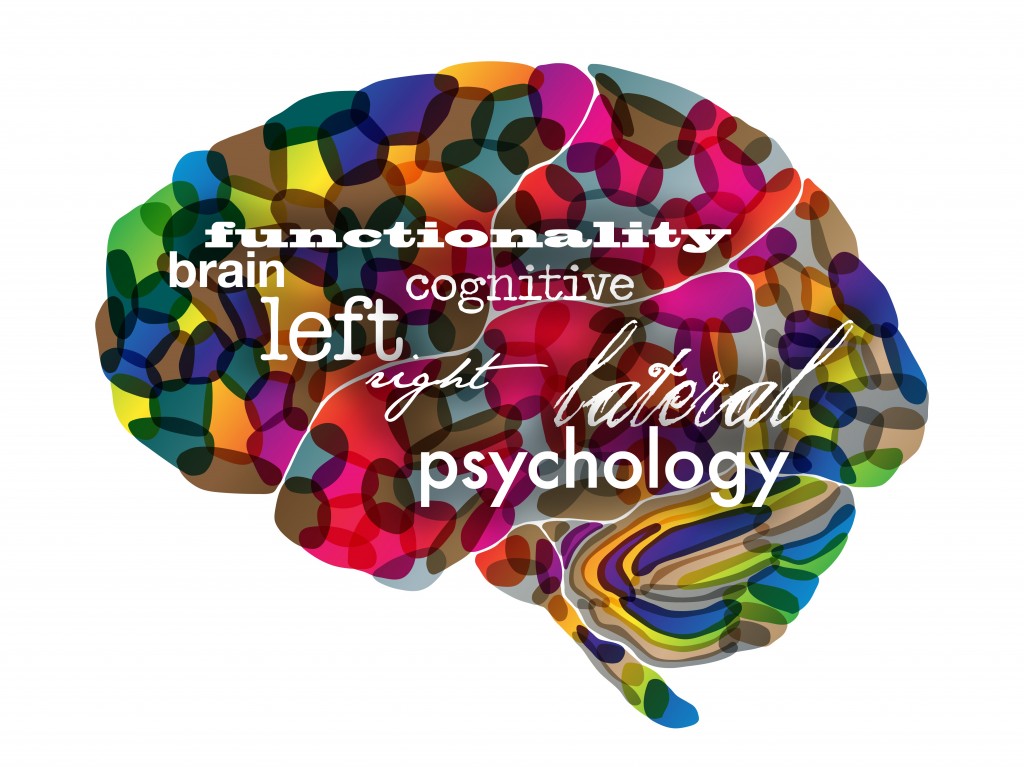
Taking into consideration the theory that our brains function differently from person to person, yet can be categorized into different groupings, we can also divide people into right brained and left brained. This of course is nothing new. The basic understanding of right vs. left brain is that the right brain controls creativity, visual and spacial perception and thinks “big picture” and ideas. The left brain controls logic, maths and sciences and thinks “practical” and reality based solutions.
The right brained tendency
Personally speaking, I have always been categorized by others as a “right brained” person – long before I had an understanding of what that truly meant. I’ve taken the tests online, seen the dancer spinning clockwise and sometimes even counterclockwise. When I wash the dishes, sometimes I stack them neatly and other times I balance them precariously in a pile. But, I can say that I believe I do have a right brained tendency – tendency being the key word.
So, who are right brained people?
There is a lot of theory as to what makes the right brained person tick. According to my go-to source, Wikipedia: “The processing of visual and auditory stimuli, spatial manipulation, facial perception, and artistic ability are represented bilaterally, but may show a right hemisphere superiority.”
Of course, not everyone with a right brained tendency has the same behaviour and thought patterns. The same is true for those with a left brained tendency. Although, there seems to be enough common ground (or mind) that these hemispherical categorizations can and have been made.
What’s the point?
The point is, even with all the research, individuals with a right brained tendency are not that well understood. They don’t typically fit the mold. However, right brained thinkers have contributed to some of the greatest discoveries and creative masterpieces we’ve ever known.
A few likely right brained thinkers
- Thomas Edison
- Michelangelo di Lodovico Buonarroti Simoni
- Pablo Picasso
- Rembrandt Harmenszoon Van Run
- Walt Disney
- Nelson Rockefeller
- Hans Christian Anderson
- Leonardo da Vinci
- Sir Winston Churchill
- Benjamin Franklin
- John F. Kennedy
- Wolfgang Amadeus Mozart
- John Lennon
- Louis Pasteur
- Orville and Wilber Wright
- Alexander Graham Bell
- Ludwig Van Beethoven
- Thomas Jefferson
- George Washington
- Vincent Van Gogh
- Agatha Christie
- Ernest Hemmingway
- Mark Twain
- Anna Roosevelt
- King Gustav IV of Sweden
- Albert Einstein
- Marie and Pierre Curie
- Socrates
- Galileo Galilei
- F. Scott Fitzgerald
- Abraham Lincoln
- Steven Spielberg
Bottom line
Don’t underestimate those right brained people that you know. Perhaps they have more clarity of thought than you realize. And, don’t be surprised when they come up with a really good idea seemingly out of nowhere. I have the privilege to work with some exceptional creative thinkers who have strongly developed right brains. Do you?
What do you think about the theories surrounding right brained psychology?