by Lindsay Sleightholm | Nov 21, 2014 | Advertising, Creative, Design, Latest
“Getting” creative
Let’s start at the beginning. Long before you decided to get into a creative industry, at some point you discovered that you were good at it. Something just clicked and it made sense to you. You enjoyed it. Sometimes you’d even get excited about it. And if you were lucky, the people around you would encourage you to keep at it. There was no doubt about it: you were headed into the business of being creative.
Doubt creeps in
Somewhere along the way from point A to point B you encountered something that made you doubt yourself. What that is varies from person to person. But most of us know what it feels like. We change from being happy and excited about what we’re working on, to thinking we’ve made a mistake. As creatives, we sometimes feel a little vulnerable about what we produce. Although we are working for our clients, our work speaks partly about who we are as people. And it can be hard not to take criticism personally.
Self-doubt is any creative’s worst enemy
What happens when you don’t have confidence in your ability? Well, it makes it very hard to be creative. A lack of confidence can actually be creatively crippling. Any idea you may have is inevitably thwarted before it can be realized because you don’t think it’s good enough. That’s only if you actually get any ideas. More often than not, if you don’t feel confident, ideas just don’t happen. Some refer to it as being “blocked”. Unfortunately for any creative, we really can’t afford be blocked.
It’s okay to question yourself
Let’s face it: the creative industry is a competitive one. So you’d be right to question your ability from time to time. I’m pretty sure that if you didn’t question it occasionally, you wouldn’t fully realize what you’re capable of. For instance, sometimes questioning what you can do leads to improving your skills or taking the time to learn about a new subject. It’s actually a good thing.
Don’t compare yourself to others
The problem comes when you question yourself in a detrimental way. One of the biggest ways to do that is by comparing your work to the work of others. This never ends well. It’s okay to be inspired by others and let that inspiration guide your work. But comparing the value of your ideas against the ideas of others is not only detrimental, it’s inaccurate. Everyone is different. Each of us experiences the world and thinks in a different way. That’s what makes being creative so exciting in the first place. By thinking that someone else’s idea is better than what you would have thought of, you’re actually making the assumption that everyone thinks the same way.
Validation builds confidence
Creativity needs to be nurtured. As creatives seeking confidence, we also require validation. Referring back to the beginning, we need acknowledgement from the people around us to encourage us to keep at it – no matter how long we’ve been doing it – whether it comes from those in our personal lives, our peers or our superiors. Ultimately, everyone needs a second nomination. Lastly, and the most important thing, is self-validation. Because no matter how anyone else views you, if you don’t believe it for yourself, it doesn’t matter what anyone else thinks.
by Lindsay Sleightholm | Dec 18, 2013 | Advertising, Latest
As we all know, any retail brand that doesn’t get on board with holiday advertising is missing out. A lagging year of sales can be more than made up for within the last couple of months with a successful holiday campaign.
Since the 1920s, The Coca-Cola Company has been doing just that – and for good reason. The initial strategy was to position Coca-Cola as a year-round refreshment in North America, despite the fact that the drink, best served cold, isn’t what most would reach for during the holidays. The benefit of their strategy is twofold: Get people drinking a cold beverage during the winter, while reaping the rewards of holiday spending.
Today, The Coca-Cola Company is one of the best at emotive advertising during this festive time of year.
But how do they do it so well? Maybe it’s because of the product’s red and white branding that is synonymous with Christmas – the holiday that Coca-Cola primarily focuses their seasonal advertising efforts around. Or maybe it’s because the brand image they’ve built up over the years really focuses on relationships, sharing and happiness – all of the warm and fuzzy feelings that consumers crave this time of year. Or maybe it’s just because they’ve been doing it a little bit longer than most.
Rather than guessing, let’s take a look at some of the holiday advertising efforts from a brand that really knows how to capture our emotions and make the most of this retail season.
Santa Claus
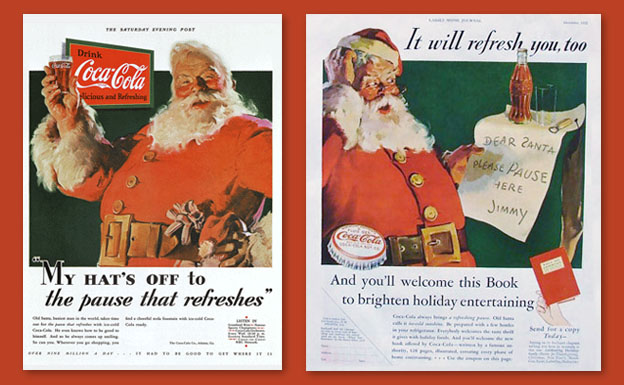
1931 marked the start of the Coca-Cola Christmas advertising campaign that would end up greatly influencing the image of the modern day Santa Claus. It was the interpretation of artist Haddon Sundblom, who was inspired by Clement Clarke Moore’s 1822 poem “‘Twas the Night Before Christmas”, that gave life to the Company’s jolly old Saint Nick. The Coca-Cola Santa could often be seen taking a break from his hectic Christmas schedule to enjoy a bottle of Coke.
 The Polar Bears
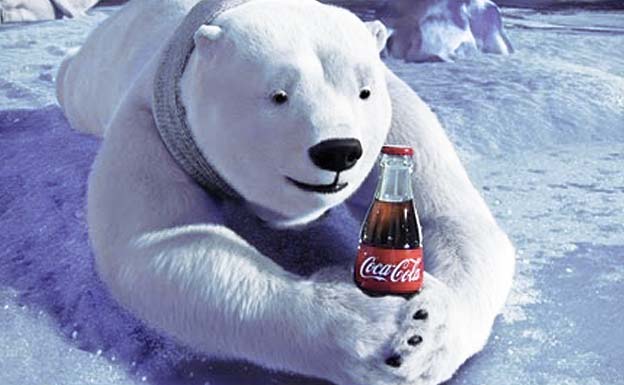
The polar bear image arrived within Coca-Cola advertising in the early part of the 20th century, appearing in print as early as 1922. Although, it wouldn’t be until 1993 that the cuddly white creatures really came to life, during the company’s “Aways Coca-Cola” TV campaign. With help from the vision of creative Ken Stewart, Coca-Cola was able to go one step further with the bears. Thanks to sophisticated computer animation, they were able to portray human-like personalities, while enjoying all the festivities of the Christmas season in the great white north – complete with Coke. “That’s really what we were trying to do – create a character that’s innocent, fun and reflects the best attributes we like to call ‘human,’” said Stewart.
 Holiday Caravan
In 1995, Coca-Cola took their holiday advertising to a truly on-the-ground level when they started rolling out a fleet of extra special delivery trucks, each decked out in Coca-Cola Christmas branding, lit up with hundreds of holiday lights and emblazoned with the phrase, “Holidays are Coming!” What started as a TV campaign now includes a rigorous agenda of actual trucks making stops at hundreds of towns around the world, with the aim of delivering some of the celebration of the season right to the consumer. For many, the trucks have now come to symbolize the official start of the Christmas season.
 After almost a century of making Christmas a top priority in their sales year, Coca-Cola has all-but cornered the market on holiday advertising. But it really doesn’t matter what you’re selling at this time of year. What matters is how you’re able to tap into the emotions of your market during the holidays. Whether you’re toting Christmas, Hanukkah, Kwanzaa or something much more holiday-neutral, what’s important is your approach to the message. If we’ve learned anything from Coca-Cola’s success, it’s that your message needs to be emotive, genuine, empathic, and it needs to appeal to everyone – from the uber-holiday enthusiast to the biggest cynic.
If you can tackle all that, your consumers will pay attention and your bottom line will reap the rewards.
by Lindsay Sleightholm | Oct 16, 2013 | Branding, Design, Latest, Marketing
Though I’m a big music fan, I’m not going to pretend I know much about the actual music industry. But I do know a lot about graphic design and have my share of marketing know-how. And I recognize that there’s a lot more to creating an iconic band than great guitar riffs and a good-looking lead singer.
Is a band a brand?
Some bands are just bands. They’re not interested in creating an identity for themselves beyond what their music conveys. Although bands who want to get to the next level know that the business of music is not unlike any other business – it requires the use of marketing, advertising and design. Like anything else, good branding can help distinguish them among the competition. Bands have their own identities. Yet as musicians they’re not just creating music, they’re also shaping a brand persona – whether this was their intention or not.
Does a band need marketing and design?
Just like any other brand, a band needs to find its audience and connect with them. This happens of course through their music. However it is also created by the interactions they have with their audience, their public performances and appearances, their official and unofficial videos on YouTube, their presence on social media and their visual identities.
This is where the marketing and design comes in. Visual identities are created in order to market the music. These identities can end up on every facet of their visual branding – from T-shirts to websites. Some of the most successful bands of all time have made great use of this visual medium.
Band brands
So putting my music tastes aside, I’ll throw on my designer hat for my picks of some of the best in band branding.
Kiss
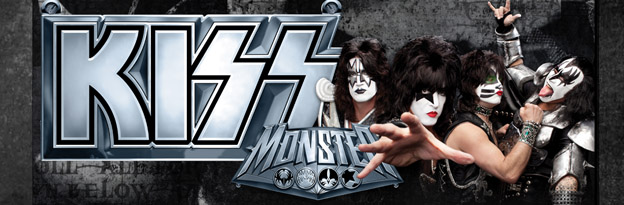
If you google “kiss”, you’ll actually get the band Kiss – which in itself is pretty impressive. Originally known as Wicked Lester, headed by Gene Simmons and Paul Stanley in 1971. But it wasn’t until 1973 that the name change to Kiss came about and a new image was born. The Kiss logo was first developed by their original lead guitarist Ace Frehley, later to be polished by designer and illustrator Michael Doret.
Since then, they haven’t just put it on a few posters and T-shirts – they ran with it. Combined with their trademark make-up and costumes, the entire Kiss brand has been built into a music empire spanning over four decades.
Chicago
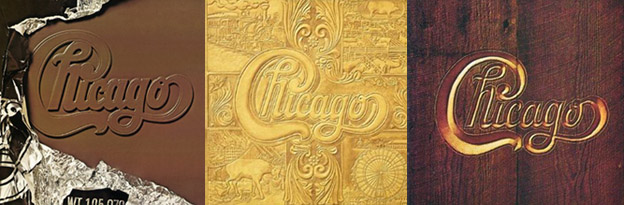
Starting out as cover band The Big Thing in 1967, a name change to The Chicago Transit Authority in 1968 was short-lived due to the threat of legal action from the actual Chicago Transit Authority. By the 1970’s the band became simply Chicago. Their final name logotype was designed by art director John Berg.
That logo has since fronted nearly all of the band’s album covers – taking on a different illustrative style each time – yet remaining true to its original design. It has also earned its place in design history, with a nod from designer and author Philip B. Meggs, in Type and Image: The Language of Graphic Design.
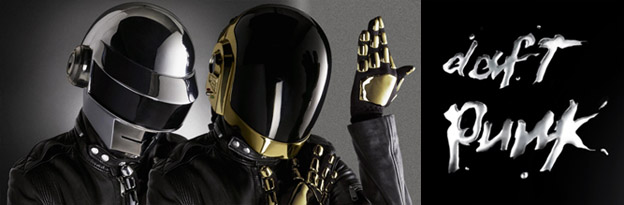
Daft Punk
The French duo that in 1992 was originally called Darlin’, after the Beach Boys song, quickly re-branded themselves as Daft Punk after receiving a negative review describing their music as “a daft punky thrash”.
By the latter half of the 90’s Daft Punk were beginning to not only carve out a place for their unique sound but their solid, albeit unconventional, visual brand. Known now for their look as much their music, the two robot-human hybrids have created an image for themselves without ever showing their faces.
These bands, although completely different in musical genre, have at least one thing in common, they have really taken advantage of branding to boost their identities – as have hundreds of other music greats. The music is their product, but they’ve also crafted a marketable image. And each is an example of how consistent branding can help propel any brand, or band, to the next level.
As most know, a good one-off will only give you your 15 minutes. But great branding, effective marketing and strong design can take what is already unique and give it the stage to really stand apart.
by Lindsay Sleightholm | Dec 17, 2012 | Advertising, Business Success, Creative, Design
Marketing and Design must work hand-in-hand. It really doesn’t matter if you have the best creative in the world; without a solid strategic plan to back it up, the message won’t see its full potential. Likewise, if the creative is overlooked for the strategic plan, the message won’t communicate what it needs to. Before delving into any advertising pursuit, a clear idea of what you’re aiming to achieve is essential. The following are some questions that many entrepreneurs have at onset for promoting their business venture.
Why do I need marketing?
Contrary to the hype you may have heard, marketing is not dead. Just like everything else, it’s evolving. What is dead is complacency. It doesn’t matter what business you’re in, if you’re standing still you’ll get left behind. By not continually reevaluating tactics and their efficacy, any business will suffer.
Today’s marketing initiatives need to be nimble. The surplus of new channels available to marketers means a greater challenge to find the best combination for each mandate. Determining that combination requires having the experience and understanding of both traditional and new marketing channels. Online marketing is crucial, but as any experienced marketer knows, you shouldn’t put all your eggs in one basket.
Can’t I just crowdsource design?
You can, but why would you? It will contribute no value to your business. On the surface, crowdsourced design has a certain “gloss” of something professional. But it will inevitably fall short on investment. That is, it won’t perform in the long run. And it won’t be effective communication. Similar to marketing, the creative for your communications is an integral part of your business message.
Graphic design needs to be clear. It also needs to speak clearly to a specific market segment. On top of that, it needs to be flexible. Without forethought into how the design will adapt to various media, it could end up being boxed into a corner. Any effective design solution should be able to cross platforms, channels and languages without hindering the message it’s trying to communicate.
Why do I need both marketing and design?
Marketing and design are a yin yang combination. In other words, their differences combined strengthen each other. Marketing creates the plan for the messaging while design delivers the right message. You could also say the tactics dictate the playground, while the creative shows it’s a fun place to visit.
Speaking of playgrounds, let’s use that as an example. Its marketing plan will take into account who will be using the playground, how they will interact with it and where to place the messaging. The design will address what the playground has to offer, how it will appeal to those using it and why they should check it out. Ultimately, you need to know not only where your market will hang out, but how to speak to them.
What am I investing in?
I used the term “investment” earlier. That’s what good design and marketing is. They don’t represent a cost rather an investment towards your business success. So, if you plan on communicating the benefits of your business to your market, that plan needs to be strategic. And, if you want your market to hear the right message, you need strong creative. What’s more, since you only have one opportunity to make a first impression, by all means make it professional. Effective marketing and design together equals successful communication that will produce results. You can count on it.
by Lindsay Sleightholm | Nov 8, 2012 | Business Success, Creative, Design
There are many questions in life that we are faced with that have yet to be answered. Some of those are: What came first, the chicken or the egg? Is the sky blue? And, is graphic design art? Most people have an opinion on all of these, but there remains no definitive answer. Ignoring the first two, let’s just dive into: Is graphic design art? This question has been debated for a long time. The following is a little food for thought.
What is art?
Art – specifically visual art – is difficult to define. Not simply because of its artistic nature, but also because what is deemed as art is constantly changing. And we as a society have never quite been able to make our minds up about what art really is.
In fact it wasn’t until just before the 20th century that anything other than fine art (that is, painting, sculpture and architecture) was actually considered to be art. Then came the Arts and Crafts movement, resulting in the shift to include the applied arts, decorative arts and crafts into the mix – meaning that everything from painting to interior design was termed as art.
So what is visual art today? Well Encyclopedia Britannica describes it as “a visual object or experience consciously created through an expression of skill or imagination.” But that’s a little broad, isn’t it? So let’s add the intention behind the process. Then we could include the artist’s motivation to create for the purpose of communicating a message.
What is graphic design?
Similar to art, graphic design lacks a satisfactory definition. Graphic design is also visual, has a process and a purpose. Design involves the use of various forms of visuals – illustration, photography and even “art” – combined with text to communicate a message to a specific audience. It speaks through a visual language. The purpose of graphic design is to solve visual problems. When successful, it communicates a very clear message.
Now that’s not to say that it lacks expression of skill or imagination. It is the role of the graphic designer to bring a unique visual aesthetic to any problem they solve. However, their end goal is for effective communication. The message is paramount and trumps individual creative expression.
So what’s the difference?
Both art and design have rich histories that illuminate many transformations to their standings within society. Historians have written volumes on it. And like any history, it involves a great deal of flux. Art has played a crucial role into the development of graphic design – there is no question about that. Without the leaps of great artists and art movements of the past, there would be no such thing as graphic design.
Although, it is the here and now that is the concern. Before entering into their creative careers, most graphic designers start out as artists of a sort. Through their earlier education (or individual endeavours) they’re first introduced to exploring creativity through art. That’s where it stems from and it’s a fundamental seed to what graphic designers do.
So yes, both artists and graphic designers are inspired to create, have creative processes that allow them to produce compelling visuals, and are intent on communicating a message. Although, it is the purpose behind their contributions that distinguish one from the other.
Art is subjective, while design is objective. In other words, art can be open to interpretation, whereas design requires complete clarity in order to be effective. What’s more, art involves a degree of self expression. Graphic design expresses in order to aid communication – if not, it fails to do its job. Consequently, art and design can no longer be considered the same thing.
What’s in a name?
So if graphic design and art are different, then what’s all the confusion about? Well it all boils down to a name game. And graphic design needs to be better defined. Many simply don’t understand what it is. The general public, clients, as well as the industry need more clarity.
A lack of clarity breeds a lack of respect. Graphic design – like art – has been through its ups and downs as a profession. And though it may not be art, it’s an incredible medium that takes a great deal of talent, passion and creativity to execute successfully. Now more than ever, graphic design needs to stand apart and keep hold of its status by having little room for misinterpretation on what is stands for and where it’s going.
So, where do you draw the line between art and graphic design? Or… this there one?
