by Miriam Hara | Nov 11, 2014 | Agency, Communications, Interactive, Latest
The holiday season is fast approaching and with it comes the decade old question, at least the biggest question around our boardroom table: Should business’ send out traditional paper or digital holiday cards? Believe it or not, it has been a decade (at least!) since digital greeting cards first made their debut.
Over the last three years, at approximately the same time every year, I have written a post about digital holiday cards. It’s a hot topic for me. There is much debate in our office about which direction to take. After all, we are a full service agency with high involvement in both the traditional and digital space.
Digital holiday cards aren’t really new, so does that take the heat off of businesses having to go that route? There was a time when it was perceived that businesses sending traditional paper cards through snail mail was not keeping in step with the changing times. But now, is that still the case? Like everything that goes up, it must come down. And everything new, becomes normal – if not old. Digital used to be called new media and now it’s not new. It’s just another media channel.
So does that open things up for businesses to embrace the traditional holiday greeting card? Will the old paper card have a come back in 2014? Can businesses go retro this holiday season? At 3H Communications, we have always sent out paper holiday cards. We design our own and it’s a project of love. Over the last decade, our cards have been one of the only ones at the table, or more accurately, on our clients’ desks. We have enjoyed this space and the exposure and hope that we will continue to enjoy such vast, open spaces!
That doesn’t mean, for one minute that we don’t embrace the digital – far from it. We have always had a digital component to our paper greeting cards. We ask our clients to go online with a QR code (when they were launched) or a web address prompting engagement to participate in a contest or charity fund raising initiative. This year will be no different.
By combining traditional with digital, we have demonstrated through the years that we are strategic thinkers. We embrace the new yet understand when and when not to use it. We also know what will resonate with our clients. This has shown our clients that we are indeed in step with trends and slightly ahead of the curve. Being a leader means knowing when not to jump on the band wagon when everyone else has. And, knowing to take advantage of the quiet space they’ve left behind.
Over the last three years, email communications have reached an all time high in quantity. I believe the last thing a client wants is to receive another email, even if it’s jam-packed with well wishes. I’m sorry to say that I don’t usually open digital holiday cards sent to me – I am too swamped with other emails. But I do open my paper mail during the holiday season. I love traditional holiday greeting cards and during the month of December, I take the time to open them. There are so few of them now, so each one gets my undivided attention.
So this holiday season are you going traditional or digital? Let me know!
by Miriam Hara | Sep 11, 2014 | Interactive, Latest, Social Media
Is our expectation for Online Security unrealistic?
Considering the speed of technology and information, by the time you read this it may already be old news. After Jennifer Lawrence and other celebrity iCloud accounts were hacked resulting in leaked nude photos, I had to wonder if our expectation for online security on the cloud or any other digital “residence” is just not realistic.
When I first heard about the “celebrity hack” my initial comment was, “Really?” and “Why would you put nude pictures of yourself out there?”. I’m not a prude, but common sense dictates that if you don’t want anyone to see certain photos, don’t put them online. Of course, I am no celebrity, so maybe the way I see the world is quite different. Maybe I’m wrong to assume that if online security is so tenuous, it would be foolish of me to think that online privacy would be any different. I equate online security to online privacy.
Hacking is nothing new. Hackers have been around from the inception of the internet. Through the evolution of transactional online stores, online banking and websites, the number one fear online has become security. With all these digital sites, the increased threat of identity theft has become an everyday concern. Information and online commentary about protecting yourself from identity theft is now quite common. Haven’t we heard and seen time and time again that technology providers and law enforcement seem to be behind the eight ball when it comes to trying to prevent or at least curtail “digital” crimes? If there’s already so much hype about the high risk of identity theft, wouldn’t the logical assumption be that photos on iCloud are subject to the same risk? To my surprise, based on all the hoopla surrounding this recent celebrity hack, perhaps not.
So how can we realistically expect online security or online privacy? Do you think that the two are one and the same? What are your views about the celebrity hack?
by Kristina Parker | Mar 31, 2014 | Interactive, Latest
Designing digital properties is more important than ever for business, and no matter what industry you are working in you should make sure that you understand it and know how to work with it. This is especially true if you are designing digital products because you need to know how to create those products in a way that will make them intuitive to use and good to look at. Designing digital properties such as blogs, websites or any online presence if you want to make the most of your marketing initiatives. In an age where every business is fighting for attention online and through other forms of media, creating an attractive and communicative design that is also technologically sound is one of the most effective ways to stand out.
Designing digital properties takes the right tech and the right approach
If your business is not intrinsically a design company though, then chances are, you may struggle when getting started and creating your layouts.Whether you are designing digital products or designing digital properties for your business, you’ll need to understand the digital space is key. Read on and we’ll look at some of the best ways you can give yourself the edge.
The Right Hardware and Software

The first piece of advice for new companies that want to improve their online digital design work, is to make sure to invest in the very best hardware and software. Software wise, big organizations will of course be able to afford more cutting edge programs that come at a premium, and these can potentially give them the edge if you’re still working with MS Paint. Fortunately though, if you know where to look you’ll find a lot of free software out there that is in many cases just as capable – or even more powerful – than the ‘originals’.
A great example of this is GiMP. GiMP is a piece of photo/image editing software that takes a similar approach to PhotoShop and that can do most of the same things that the famous Adobe offering can. The only real difference? It’s free! Likewise ‘Open Office’ will give you Microsoft Office functionality with no fee, while Blender lets you create 3D files for a fraction of the cost.
Hardware wise it’s worth looking into which devices can give you the edge and help your designs to look more professional while saving you money. For instance, rather than use an expensive graphics tablet to input hand-drawn images, many companies can get by simply using a touchscreen hybrid slate computer with a stylus. This way you can draw straight onto the screen using software like SketchBook Pro.
Likewise why not look into getting a 3D CAD scanner? This way you can save hours building 3D models by instead scanning real objects in and getting the files automatically. Anything you can think to scan can that way become a 3D image for your designs.
The Right Approach

While you evaluate and decide which software and what hardware to purchase, you also need to think about how you approach designing your digital properties, and here the right attitudes can make a huge difference.
When it comes to designing digital properties such as web design, or design for marketing material, remember that less is very often more. Minimalism is very in vogue at the moment – particularly on the net – and the good news for you is that this decreases the amount of work you can do. Instead of looking for design flourishes you can add to your pages and layouts, instead think about the design elements you can remove to create a cleaner and more modern looking page and to save yourself time!
This is something that ‘indie game’ developers do very well. They can’t compete with the 3D graphics of blockbuster games, so instead they choose quirky and minimalist graphics styles – working all in one colour, or using silhouettes, or going for a purposefully ‘retro’ appearance. It’s easier for them, but actually just as eye-catching.
Finally, don’t be afraid to outsource. While it’s nice to do things yourself where possible, think about the time factor and obviously the end result. If there is an outside resource that designs digital properties more efficiently, at a value cost, then it’s only vanity to do it yourself.
by Kristina Parker | Mar 24, 2014 | Interactive, Latest
Web design doesn’t only mean website design. If you’re creating any digital product, be that a website, an app or even an eBook, then you may find that the temptation is there to rush out your final product and to ‘make do’ with work that doesn’t represent your very best. The problem is that it’s all too easy to create these products thanks to the wealth of great tools that take a lot of the grunt work out of our hands. With WordPress it’s a simple matter to create a web design for your website by just tweaking a couple of settings, which can make it all-too-easy to just settle for whatever look you stumble on first.
But if that’s your attitude then you need to be careful. When it comes to making a great impression online, the devil is very much in the details. Cutting corners on our web design can have a big impact on the overall appearance of your site while tweaking even the tiniest factor can make everything look more professional and more impressive – which translates as more visitors, more sales and more profit.
If you want to make your digital product look its very best with just a few minor web design tweaks, here are some of the things that you should consider first…
Animation
If you have a website or an app then it may have some basic animations for opening new pages or closing elements etc. If you’ve implemented animations like this at all then congratulations – you’re already one step ahead of much of the competition.
At the same time though, if you’ve just settled for a stock animation then this might not be making the very most of what you could potentially do. Case in point – have you considered an ‘ease-in’ or an ‘ease-out’? These describe slight changes to animations in which the objects accelerate and decelerate at the start and end of the movement. There’s another aspect to consider too called the ‘overshoot’ in which the object will travel slightly too fast – almost excitedly – and then be forced to ‘bounce back’ into the correct position. While these changes may seem almost imperceptible, they can actually make a massive difference to the overall sheen of the app or website by giving it that professional polish and lending your elements almost a ‘personality’ of their own.You can add more elements to an animation too. Why fade in or come in from the left when you can do both?
Orientation
Here’s something you’ve probably never considered: which way are the images on your website facing? In other words, if your image had a face, would it be looking in at the text, or away off to the edge? You might not realize this, but if you look at professional sites and magazines it’s always the former: all elements point in towards the content which has the effect of bringing the viewers’ eyes in that way too. Again, you probably wouldn’t think it would make that much difference, but now that we’ve been trained to expect this setup, your site will look less professional unless it features it.
Rounded Edges
Here’s a brilliant example of a very small design element having a big difference – rounding the edges of your boxes. Even doing this ever-so-slightly will again show attention to detail and give your app, website or book the appearance of being customized by a professional team and not just created in a ‘cookie cutter’ conveyor belt type manner. Add custom edges to your CSS elements and you’ll notice instantly how much better everything looks.
The Date
We’ll end on a really easy one: if your copyright notice still has the date from two years ago on it, then it’s pretty important that you fix that to show your site hasn’t been forgotten. Otherwise the money you spend on those ad slots will be wasted. Would you buy from a site that couldn’t be bothered to update its copyright notice to the right year?
by Kristina Parker | Feb 5, 2014 | Interactive, Latest
The app market has provided something of a gold rush for a while now. By providing millions of users with a way to quickly and easily download any piece of software, iTunes and the Google Play Store have created huge opportunities for programmers and marketers and this has led to an influx of games, productivity apps and more which have made a lot of people very wealthy. 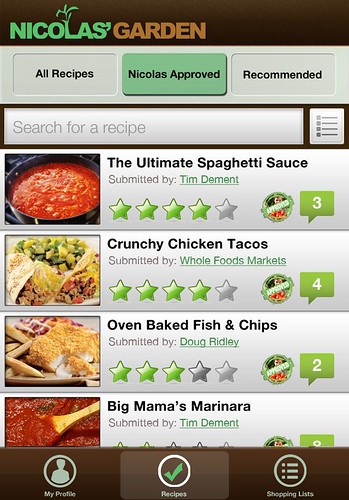 But while there is still a lot of money to be made here, unfortunately it has become increasingly difficult to actually make that money due to an increasing amount of competition. These days it is a challenge to stand out from the crowd and so it has become necessary to try applying some more conventional forms of marketing and advertising in order to turn an app into a verified hit. Here we will look at some of the unique ways you can promote and app and turn it into a hit.
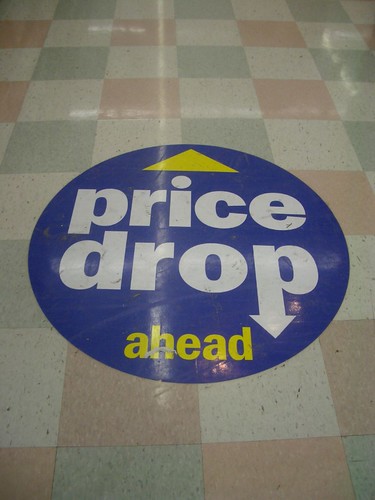 Price Drops
There are many sites online that exist entirely to inform buyers of recent sales and price drops for popular apps. These sites work by scanning the various app stores automatically and highlighting the biggest price drops, and that means that you can easily get noticed by simply having a big sale. This can then lead to a huge increase in downloads for a short while as people will rush to your product and more will be made aware of it. Of course you’ll earn less per-sale, but normally this still results in an increase in profits for a while at least.
Team-Ups
Another way to promote your application is to somehow team up with a blogger or YouTube channel which has access to a large audience. This way you can offer their viewers an exclusive discount for example, or you can offer to promote their channel through your app in exchange for them doing the same for you. 
The problem of course is getting those people with a big platform to respond to your unsolicited e-mails rather than just deleting them. The solution though is a simple matter of carefully choosing the right person to contact in the first place. Specifically, you should be contacting people who have a large platform, but who are still at a similar level to you in terms of success – or ideally even lower. What you need to do, is to find someone new and preferably young, who will still be excited to be contacted by a big ‘app developer’. They will be enthusiastic and their site will benefit from the deal, but at the same time they’ll also have the large audience that can help you increase downloads.
Better yet, by approaching smaller outlets first, you can actually end up gaining coverage on larger sites/in larger magazines. That’s because these often look to smaller outlets in order to get breaking news, and once they’ve seen it covered well once, they’ll be more likely to take an interest than if you approached them directly.
Advertising 
While many people don’t consider advertising for mobile apps, this can still actually be a highly successful way to get more downloads and especially if you do it right. Even if those ads don’t lead directly to downloads, they can increase awareness which can boost exposure and help you to get more users. There are many great ways to advertise for an app. Advertising on internet TV for instance can work well as it allows your ad to be seen by people who are online and able to immediately follow a link to a download. Likewise you can advertise through Facebook with highly targeted ads, or through Google AdWords. Another option though is to go the ‘old fashioned’ route and try advertising through more traditional mediums – such as magazine or television. Here you face less competition and that can make your app more memorable. Better yet, if you should get a review or advert in a magazine that specialises in your niche (a writing app in a writing magazine for instance), then you will have a direct ‘route to market’ that will lead to lots of new downloads.
by Belinda Lui | Jan 26, 2014 | Interactive, Latest
When a business embarks on a site refresh or re-design, one of the key factors to consider is whether search optimization has been implemented in the content that lives on each page. Is the website complicated and busy? Is it intuitive and easy to navigate? While there are many elements to successfully creating a site with search optimization, this post will focus on “busy-ness” and how that may affect your sales:
Using less will give you more when it comes to search optimization.
Consider this as an example:
A recent test was done on MECLABS’ online retail Research Partners and how the team was able to achieve a 10% lift in checkout completion rate by simply removing distracting elements.
The MECLABS team recently ran a test within the checkout pages for an online retailer. The goal of the test was to increase the checkout completion rate. The team identified a number of elements causing friction within the checkout pages and likely distracting visitors from completing the checkout process. The most drastic change was removing the static navigation bars (left and top navigation) from the checkout pages.
This removed visually distracting elements from the pages as well as deleted possible exit points for visitors, keeping visitors focused on proceeding through the checkout process.
The team also took out a page within the checkout process that was simply confirming the visitor had created an account.
This step was unnecessary and forced visitors to make one extra click to proceed through the funnel, giving them an additional opportunity to abandon the funnel, and again, distracted them from the goal of the checkout pages.
By simply removing friction-causing elements from the checkout pages, the team was able to increase the checkout completion rate by 10%, which turned out to be a 19.95% increase in revenue per visit to the checkout process.
When implementing search optimization to your website, you should evaluate each page element and consider whether it is helping the goal of your site or distracting visitors. Any potentially distracting element is an opportunity to test how your pages perform with those elements removed.
Always remember that less is more when it comes to your website. Keep your pages focused and remove any elements that prevent visitors from completing your goals for the site, such as completing a checkout.