by Belinda Lui | Dec 20, 2013 | Communications, Latest
The art of communicating, in my opinion, isn’t given enough weight when discussing business success. Being able to formulate questions that deliver useful answers, is a skill that every professional (and people, in general) should hone to ensure a better chance at success. Good questions can move your business, organization, or career forward. They squeeze incremental value from interactions, the drops of which add up to reservoirs of insight.
The problem is, most of us ask terrible questions. We talk too much and accept bad answers (or worse, no answers). We’re too embarrassed to be direct, or we’re afraid of revealing our ignorance, so we throw softballs, hedge, and miss out on opportunities to grow.
But we don’t have to.
The following advice can help you with communicating, not to mention being a better conversationalist:
Don’t Ask Multiple-Choice Questions
When people are nervous, they tend to ramble, and their questions tend to trail off into a series of possible answers. (“What’s the most effective way to find a good programmer? Is it to search on Monster or to go on LinkedIn or to talk to people you know or … uh… uh… yeah, is it to, um…is there another job site that’s good …?”) You’re the one with the question; why are you doing all the talking? Terminate the sentence at the question mark. It’s OK to be brief.
Don’t Fish
“The really ‘bad’ questions are leading ones–the questions where you’re fishing for a particular answer,” says veteran journalist Clive Thompson. First of all, if you know the answer, why are you asking? If you’re seeking confirmation on something you already suspect, ask objectively, and ask directly. You’ll come off as confident (and less of a chump), and you’ll get more honest answers.
Interject With Questions When Necessary
Stopping a conversation to ask the right questions is far superior to nodding along in ignorance. Notice how great interviewers like Larry King or Jon Stewart maintain control of their conversations; it’s almost always through polite interruptions–not with things they want to say, but with questions that keep the Q&A on course. Mature people will rarely be upset by interruptions that let them continue talking. To the contrary, additional questions make people feel like they’re being listened to.
Repeat Answers Back For Clarification Or More Detail
If you’re getting vague responses–or complicated ones for that matter–restate the answers in your own words. (“So, your software will email me any time there are important news stories in my industry?”) This will typically yield either a definitive “that’s correct,” or a clarification with extra detail. Either way, it’s useful for getting a precise answer.
Don’t Be Embarrassed
The worst kind of question is the one left unasked. There’s typically no point in pretending you know something when you don’t. People are much kinder than we often give them credit for. If you are unsure about something, just ask.
And if you ask a bad question from time to time, it’s okay. It happens to the best of us. The advice in this article, however, is a good starting point to asking better questions, communicating more effectively, and moving forward in your professional success.
(Information from: Fast Company)
What other tips can you suggest for asking better questions?
by Lisa Wedmann | Dec 19, 2013 | Latest, Social Media
According to Socialnomics, 40% of Canadians were using Facebook or Twitter by 2010. By 2012, almost half of the population had joined social media sites. In 2013, it is established 2/3 of Canadians now use social media. These are facts to be considered when strategizing for a brand launch.
These are numbers that brands just can’t ignore. They realize that they need to be on social media. So, without a lot of thought or planning, they decide to go all in. Next thing you know, they join Facebook, Twitter, Pinterest, Instagram, LinkedIn and Google+.
Then, reality sets in. Social media is not easy. Before jumping in, with both feet, brands need to take a step back and set up a clear brand launch social media plan.
Here are just a few of the steps that companies need to look at before jumping into the social media world in their brand launch!
Research
Who is your audience? What platforms do they use? When do they use them? Why do they use them? The more informed you are, the better the decisions you will make about platforms and content.
Objectives
Just as important as the research, you need objectives. What are your goals, short-term and long-term. Where do you want to go, and how does social media fit into your overall plan.
Create an Editorial Calendar
Plan out the year, then month and eventually the week. Include blogger campaigns, contests and posts. Then layer in all marketing plans since social media give you a chance to amplify promotions, from coupons, to charity campaigns to in-store promotions.
Be Social
Unlike traditional advertising, social media is not simply about putting a message out there. It’s all about the relationships! This means you need to engage, share and respond in a timely fashion. Being present will build the basis for strong relationship. It’s not just about the number of followers, it’s about the level of engagement!
Listen
And if we want to grow those engagement numbers, we can’t just keep talking. It’s important to listen, and really hear what your audience sharing and asking about. What are they concerned about.
Tell a Compelling Story
Social media allows you to tell a story that will create interest, engage your audience and build brand loyalty. Stories are compelling, and will draw in followers and allow consumers to connect with your brand.
Last, but not least, you need Patience! The followers and engagement, will come. But it will take time. And content. Lots of it! What is the one thing that you have found to be most important when launching a brand on social media platforms?
by Lindsay Sleightholm | Dec 18, 2013 | Advertising, Latest
As we all know, any retail brand that doesn’t get on board with holiday advertising is missing out. A lagging year of sales can be more than made up for within the last couple of months with a successful holiday campaign.
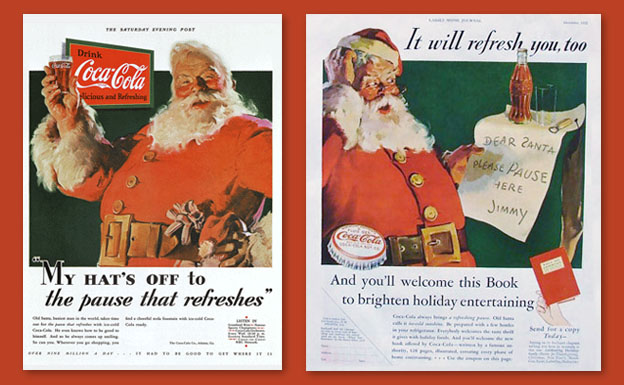
Since the 1920s, The Coca-Cola Company has been doing just that – and for good reason. The initial strategy was to position Coca-Cola as a year-round refreshment in North America, despite the fact that the drink, best served cold, isn’t what most would reach for during the holidays. The benefit of their strategy is twofold: Get people drinking a cold beverage during the winter, while reaping the rewards of holiday spending.
Today, The Coca-Cola Company is one of the best at emotive advertising during this festive time of year.
But how do they do it so well? Maybe it’s because of the product’s red and white branding that is synonymous with Christmas – the holiday that Coca-Cola primarily focuses their seasonal advertising efforts around. Or maybe it’s because the brand image they’ve built up over the years really focuses on relationships, sharing and happiness – all of the warm and fuzzy feelings that consumers crave this time of year. Or maybe it’s just because they’ve been doing it a little bit longer than most.
Rather than guessing, let’s take a look at some of the holiday advertising efforts from a brand that really knows how to capture our emotions and make the most of this retail season.
Santa Claus
1931 marked the start of the Coca-Cola Christmas advertising campaign that would end up greatly influencing the image of the modern day Santa Claus. It was the interpretation of artist Haddon Sundblom, who was inspired by Clement Clarke Moore’s 1822 poem “‘Twas the Night Before Christmas”, that gave life to the Company’s jolly old Saint Nick. The Coca-Cola Santa could often be seen taking a break from his hectic Christmas schedule to enjoy a bottle of Coke.
 The Polar Bears
The polar bear image arrived within Coca-Cola advertising in the early part of the 20th century, appearing in print as early as 1922. Although, it wouldn’t be until 1993 that the cuddly white creatures really came to life, during the company’s “Aways Coca-Cola” TV campaign. With help from the vision of creative Ken Stewart, Coca-Cola was able to go one step further with the bears. Thanks to sophisticated computer animation, they were able to portray human-like personalities, while enjoying all the festivities of the Christmas season in the great white north – complete with Coke. “That’s really what we were trying to do – create a character that’s innocent, fun and reflects the best attributes we like to call ‘human,’” said Stewart.
 Holiday Caravan
In 1995, Coca-Cola took their holiday advertising to a truly on-the-ground level when they started rolling out a fleet of extra special delivery trucks, each decked out in Coca-Cola Christmas branding, lit up with hundreds of holiday lights and emblazoned with the phrase, “Holidays are Coming!” What started as a TV campaign now includes a rigorous agenda of actual trucks making stops at hundreds of towns around the world, with the aim of delivering some of the celebration of the season right to the consumer. For many, the trucks have now come to symbolize the official start of the Christmas season.
 After almost a century of making Christmas a top priority in their sales year, Coca-Cola has all-but cornered the market on holiday advertising. But it really doesn’t matter what you’re selling at this time of year. What matters is how you’re able to tap into the emotions of your market during the holidays. Whether you’re toting Christmas, Hanukkah, Kwanzaa or something much more holiday-neutral, what’s important is your approach to the message. If we’ve learned anything from Coca-Cola’s success, it’s that your message needs to be emotive, genuine, empathic, and it needs to appeal to everyone – from the uber-holiday enthusiast to the biggest cynic.
If you can tackle all that, your consumers will pay attention and your bottom line will reap the rewards.
by Miriam Hara | Dec 16, 2013 | Advertising, Latest
It really goes without saying that star power builds awareness. However, utilizing celebrities as part of a brand’s advertising campaign can be a double-edged sword. The more obvious reason is that stars themselves, especially in today’s landscape, are brands in their own right. They aren’t just actors or athletes, they too are responsible for their own brands and propelling it forward. As such, it is difficult for a brand not be eclipsed by the star’s own brand… and to stand apart from the star’s own persona. But it can be done:
No brand utilizes star power as well as Chanel No 5.
Chanel No 5 has always used star power to propel its brand forward; to constantly reinvent itself and to evolve with the times. In fact, star power is at the cornerstone of Chanel No 5’s brand persona. The 2013 ads for Chanel No 5 featuring Brad Pitt were very well thought out. It was a novel approach featuring a man’s perspective on Chanel No 5. With Brad Pitt, Chanel No 5 spoke to women on a totally different level than the ads that featured Nicole Kidman and yes, even Catherine Deneuve (1979 Chanel No 5 ad). Brad Pitt spoke to Chanel No 5’s target – women on a purely fantasy level.
Now, one year later, Chanel No 5 advertising, just in time for the holiday season, features the legendary star Marilyn Monroe. What a beautifully executed, thought-provoking and emotive concept. It speaks to women on so many levels — although I would say with confidence, it equally speaks to men!
From a design and purely conceptual level, the current Marilyn Monroe is no trend, embracing the retro trend. The film footage in black and white is beautiful to look at and the audio track adds nostalgia to the sexy persona that is synonymous with Marilyn Monroe. Highly emotive, the ad playing on every woman’s sexiness. With that one simple testimonial, “I wear Chanel No 5 to bed” unlocks the inner woman in every woman. What woman can’t relate to the idea of this self-indulgent concept, celebrating her independence and self-love!
So kudos to Chanel No 5… Much to my chagrin, I must say, “step aside Brad Pitt!”… after all, Marilyn Monroe provides to women something that Brad can’t offer: a feeling that is easily attainable. All they need to do is wear Chanel No 5 to bed!
by Belinda Lui | Dec 16, 2013 | Business Success, Latest
Productivity means making active steps towards accomplishing something — not thinking about what we have to accomplish. What are we “putting down” when we “put it down on paper”: a current of thought, a torrent of emotions, the first incisions of a decision Flannery O’Connor said that she writes in order to discover what she knows. And as research into writing shows, the act of tracing your thoughts across a page can make you more productive, more emotionally aware, and a less irrational decision maker.|
If we spend less time trying to remember what we have to do and spend more time figuring out how we are going to do them, this will result in increased productivity and efficiency.
Here’s why…
1. Writing clears the clutter from your mind
TED speaker David Allen emphasizes that your mind is for processing, not for storage. Storage of information, after all, can be outsourced in any number of ways, including writing down your to-do list on a pad of paper. The insight underlying this is that attention is a finite resource, one that gets depleted over the course of a day. So if you’re walking around thinking about what you need to do next–rather than thinking about how you’re getting to get it done–you’re misspending your neurotransmitters and letting your productivity suffer.
2. Writing assists in retaining a bank of knowledge
Productive people take better notes: if somebody is dropping knowledge on you, writing down what they say allows you to commit your attention to next insight–rather than trying to remember the last one. Like the Chinese proverb says, you can trust the faintest of ink more than the strongest of memories . As you take more and more notes on awesome things said and read, you can amass an awesome bank of knowledge.
3. Writing helps with realizing growth
Journaling in particular helps you see how you have grown. Harvard Business School research director Teresa Amabile has discovered that people feel more engaged, more productive, and have a greater sense of meaning in their work when they record even the most miniscule of accomplishments within their days. She calls this the Progress Principle: the more you’re aware of your progress, the more involved you’ll feel in making it continue to grow–productivity is making use of this learning.
4. Writing helps you understand your life
University of Texas psychologist James W. Pennebaker has found that writing about their lives helps people to organize their thoughts and find meaning in their traumatic experiences–from people diagnosed with HIV to Vietnam veterans. This is crucial, since the more meaning you find in your difficulties, research shows, the more resilient you’ll be in over-coming them, which reminds us of how the happiest people often have the hardest jobs.
5. Writing helps you become more wise
The last reason to write about life: it helps you study your emotions, which makes you wiser, faster.
“What we construct as wisdom over time is actually the result of cultivating that knowledge of how our emotions behaved,” says USC neuroscientist Antonio Damasio, “and what we learn from them.”
This reinforces Nobel Prize winner Daniel Kahneman’s recommended first step for making better decisions: buy a notebook
(Information from: Fast Company)
How has writing helped you in terms of productivity? Tell us in the comments.