by Christine Marr | Jun 21, 2012 | Advertising, Business Success, Creative
Creativity is not a gift possessed by few. I can just hear the combined outcry from all CPs (Creative Professionals)! According to Jonah Lehrer, in his book “How Creativity Works“, creativity is a thought process that we all can learn. I tend to agree with Lehrer . I have seen this in action where a “non-creative” professional has stated something within a brainstorming session that has inspired a great idea. In the pursuit of the next great idea, innovation or concept, “creative” individuals gather around to catch that ever elusive WOW moment.
Our 3H brainstorming sessions are relaxed and informal, usually accompanied by popcorn (cause who doesn’t like popcorn?), a big (HUGE) notebook, a black Sharpie pen, armed with briefs, background information, research, market trends, etc… Just when you think that’s it, there’s more controversy from Lehrer’s book… and let me say this from the get go… I don’t necessarily agree with. Lehrer is of the belief that group brainstorming sessions don’t work. Group brainstorming sessions have worked for us.
However, some say group brainstorming sessions don’t work because we cannot demand creativity, that ideas usually come more freely when we are doing things like brushing our teeth or driving to work. As in most group dynamics, those with the biggest egos get heard, leaving the rest quiet, forgetting their idea while they wait for their turn to speak, or worse, neither able nor motivated to contribute to the conversation. In a large group, it is often easy for one to ride the coattails of the more vocal in the group, focusing on other people’s ideas, consequently not generating their own original thoughts.
In our agency, we brainstorm to find solutions to solve a problem, remove an obstacle or rise up to a challenge. Our group is not small nor big… and we often build on each others ideas, successfully! In our group we all think differently. Our different backgrounds and experiences have provided us with a unique dynamic in achieving creative results. Everyone acknowledges that individually we have something valuable to offer. When you work as a team like this, everyone can take ownership for the resulting solution, and feel passion and enthusiasm for the end result. In a group dynamic, it is important that everyone is encouraged to participate, to allow the freedom to speak out loud… there are no bad ideas, thoughts or words: each suggestion or idea builds on the next. We follow our Brand Kinetix process. In broad strokes, here is how we work it:
- In a comfortable, relaxed environment, we discuss and agree on the objective, based on a client brief.
- We eat popcorn. This is essential for our brainstorming sessions to achieve success.
- We share ideas and suggestions, having agreed on a time limit, knowing that this may be the first in a series of brainstorming sessions.
- One person manages ideas in whatever way works best for your group: sticky notes, big piece of paper, a bulletin board, etc.
- Come up with a handful of good ideas, refine them, and then regroup to see if it stands the test of “the day after, the afternoon before”.

There are many other “organized” approaches towards brainstorming to keep things fresh and stimulating. Here are a few:
6-3-5 Brainwriting – according to Wikipedia: The technique involves 6 participants who sit in a group and are supervised by a moderator. Each participant thinks up 3 ideas every 5 minutes. Participants are encouraged to draw on others’ ideas for inspiration, thus stimulating the creative process. After 6 rounds in 30 minutes the group has thought up a total of 108 ideas.
The Stepladder Technique: This is a decision-making approach involving the creation of a two-person subgroup (the core) that begins initial discussion of the group task. After a predetermined time interval, another group member joins the core group and presents his or her ideas. The three-person group then discusses the task, and the process continues in steps until all members have systematically joined the core group. When this occurs, the group arrives at a final solution.
Round-Robin Brainstorming works like this: 1. Sit your group or team at a table. Each person gets a stack of index cards. 2. One person communicates the brief to the group. No one else speaks yet. 3. Each person quietly takes a card and writes down one idea. They then pass the card to the person on the right. 4. That person reads the card and uses it to generate a new idea. He or she then turns the first card upside down in a stack, and passes the new card to the right.
5. The process of writing new ideas and passing to the person on the right continues for a set amount of time, perhaps ten minutes. 6. At the end, the facilitator gathers the cards and reads each idea aloud. The cards are then arranged and grouped on a whiteboard or wall, with duplicates discarded. This is used to stimulate discussion or more ideas.
How do you feel about brainstorming as a group? Are you in agreement that “a-ha” creativity can’t be achieved in this context? Are there other approaches that you’ve utilized? I invite you to share them here.
by Lindsay Sleightholm | Jun 1, 2012 | Business Success, Design
To spec, or not to spec: that is the question
As a graphic designer, I understand the need to build your portfolio, expand your client base and stretch your creative muscles as much as possible. But from one creative professional to another, I feel compelled to urge you not to participate in spec (speculative) work – including design contests and crowdsourcing.
What is spec work? It’s submitting creative or graphic design to a potential client who hasn’t yet agreed to pay you for that work. As a result, that potential client can offer up any type of possible compensation, or, I should say, the possibility of compensation – without legally promising anything. And you may never see a dime.
Need an example?
All right, let’s say Company X launches a promotion calling for entries for the design of their new logo. In return, they’re offering a $250 prize to the winner – plus, the bragging rights that go along with having published work. What’s more, no experience is necessary. If you win, there is also the possibility to include that piece in your portfolio, opening the doors to many more opportunities in the future. Sounds great, right?
Well, there are a few more questions you need to ask yourself before proceeding with your contribution. First of all, why is Company X using a contest to develop their new logo? Why not just hire a designer? Do they not have the funds to actually pay for graphic design? Is this actually what my time and skills are worth? Will this really lead to more opportunities from bigger clients in the future?
Amateur or professional?
There are certain groups of individuals that are within the rank of amateur. Amateurs often are going through the process of participating in competitions in order to hone their skills and improve their rank. There is a judging panel that decides final rank and ultimately a winner. Typically, this also means no payment is received. Some of these include Olympic athletes, voice, dance or acting talent hopefuls.
On the other side of the spectrum, there are professionals. These individuals are paid to perform specialized tasks. Graphic designers are within this category. Unfortunately, as is common practice within the industry, there is a process called “pitching” to a potential client. This is generally understood, as mandated by clients, as being spec. To any agency, this means their creative potential is cut short by having only the limited information given within the brief. In addition, the agency may or may not be informed that they have competition. Ultimately, it is the time, concepts and designs of the creative team that are presented; yet, these individuals are the only ones around the boardroom table who will not be paid to be there.
Why is it that creative professionals should have to take on gratis work, that in effect, puts them in the category of an amateur?
Is spec work bad?
When it comes to spec work, “bad” may not be the right word to choose. “Unethical” would be more appropriate. “Risky” might be even better.
By not having a solid agreement in place between the designer and client, there’s greater risk for the designer. The designs offered up could potentially be used without the designer’s knowledge, and he or she is by no means guaranteed compensation. Even the prize initially promised could end up being less than advertised. What at first seemed like a nice, shiny carrot could later resemble little more than scraps.
As a designer, you’re not the only one who may lose out from being part of a design contest. Spec work devalues the entire graphic design industry. It drives down the going rate for design work, while driving up the misconception that graphic design can and should be acquired as cheaply as possible. Put simply, it makes it difficult for everyone else in the industry to be respected for their worth.
We all make mistakes
Okay, so now you know a little more about spec work. Think back to that contest you entered a few months ago. You put a lot of hard work into that design, and sent it off with high hopes of being chosen as the winner, right? I’m guessing not much resulted from that entry. If you were lucky, maybe you got a “thank you” for a job well done. Does this sound familiar to you?
Everyone makes mistakes. What’s important is learning from them and passing on those lessons to others. Instead of entering contests, there are much more effective ways to build up your experience and credibility. If you haven’t already, get yourself on LinkedIn, visit your local design council, or talk to that friend-of-a-friend who knows someone in the industry. Fostering good relationships with your peers is a much more reliable way to further your career.
While we’re on the subject, here are some great resources for learning more about spec work:
• AIGA, the professional association for design (AIGA – USA)
• Society of Graphic Designers of Canada (GDC – Canada)
• No!Spec (international)
There are always different sides to the same story. This is my view. I’d like to know your view on spec work.
by Lindsay Sleightholm | May 15, 2012 | Advertising, Business Success, Creative, Design
As creative professionals, we all know that it’s not always easy to communicate the thinking behind design solutions to a client. There are several reasons for this. If it’s a new client, they may have yet to trust your expertise, or you have yet to earn their trust. Another scenario, is that the client may not have enough experience or knowledge of design and branding. Lastly, it could be because the creative you presented pushes the client beyond their comfort level.
No matter what the reason, there are going to be times when you need to make that extra effort to communicate just exactly why your fantastic concept is so… well, fantastic. Chances are, if the client is reluctant in any way, you won’t sell them on the idea. So, in order to avoid going back to the drawing board, try to minimize the margin of error with better client communication.
Here’s 5 tips to maximize your client communication…
1. Start with the basics.
Refer back to the brief. Knowing and having an understanding of the goals the client had in mind is crucial to achieving a solution. Reiterate what was first given as the creative and strategic mandate and tie it directly into the creative solution you’re offering. After that, explain the thinking process that took place for you to reach your creative solution.
2. Don’t use too much design lingo.
Many clients don’t have a background in marketing or design, so it’s best to refrain from throwing out terms that the client may not be familiar with; it’ll only lead to more confusion and frustration on their part. Instead of talking about hierarchy, typography, negative space or Gestalt principles, express these intentions in more universal terms like “focus,” “eye path” and “emphasis.”
3. Show it.
Most clients – and people for that matter – are much more inclined towards visuals than words. Present clear, polished creative options to your client. But don’t just leave it at one solution. It may require a lot more legwork, but an effective and professional client presentation means providing multiple options. As we as creative professionals know, there’s always more than one way to achieve a solution. Give your client the opportunity to see those other options.
4. Throw in a little 101.
Although you don’t want to overwhelm them with industry jargon, you do want your client to get a peak at the method behind the madness. Sometimes that means educating them about the principles of design and the strategy behind the marketing. If your client doesn’t understand these strategies or principles, try explaining it to them. But again, break it down into ideas and terms they can relate to.
5. Listen and address concerns.
Sometimes the brief may have been followed to a ‘T’, but ends up not ringing true for what the client actually wanted. In that case, ask questions and listen to the answers. What’s not working for them? How are your concepts different from what they expected? Dig around a little and find out where you and your client’s thinking differs. It may mean taking a step back to reevaluate the goals and possibly reworking the creative. But it’s important to realize and respond to these concerns so you have more effective communication in the future.
Bottom line: The communication you have with your client can make the difference between a good relationship with them or a bad one. You want them to trust in your expertise. The easier you make it for them to do that, the better it will be for you both. However different your backgrounds may be, finding that common ground will allow for the possibility of greater success on both sides.
What other tips can you share about successful client communication?
by Lindsay Sleightholm | Apr 19, 2012 | Advertising, Branding, Business Success, Creative, Design
Psychology has always strived to create measures for how to categorize one’s aptitude and behaviour based on brain function. “What’s your IQ? What’s your EQ? What do you see in this ink blot?” There are innumerable tests designed to determine how we as people think and process information.
Mapping Psychology
The cognitive tests, models and theories based on studying the human mind can help us determine individual and group responses to certain stimuli. With this research, we have a better understanding of the differences in the way people think.
Taking into consideration the theory that our brains function differently from person to person, yet can be categorized into different groupings, we can also divide people into right brained and left brained. This of course is nothing new. The basic understanding of right vs. left brain is that the right brain controls creativity, visual and spacial perception and thinks “big picture” and ideas. The left brain controls logic, maths and sciences and thinks “practical” and reality based solutions.
The right brained tendency
Personally speaking, I have always been categorized by others as a “right brained” person – long before I had an understanding of what that truly meant. I’ve taken the tests online, seen the dancer spinning clockwise and sometimes even counterclockwise. When I wash the dishes, sometimes I stack them neatly and other times I balance them precariously in a pile. But, I can say that I believe I do have a right brained tendency – tendency being the key word.
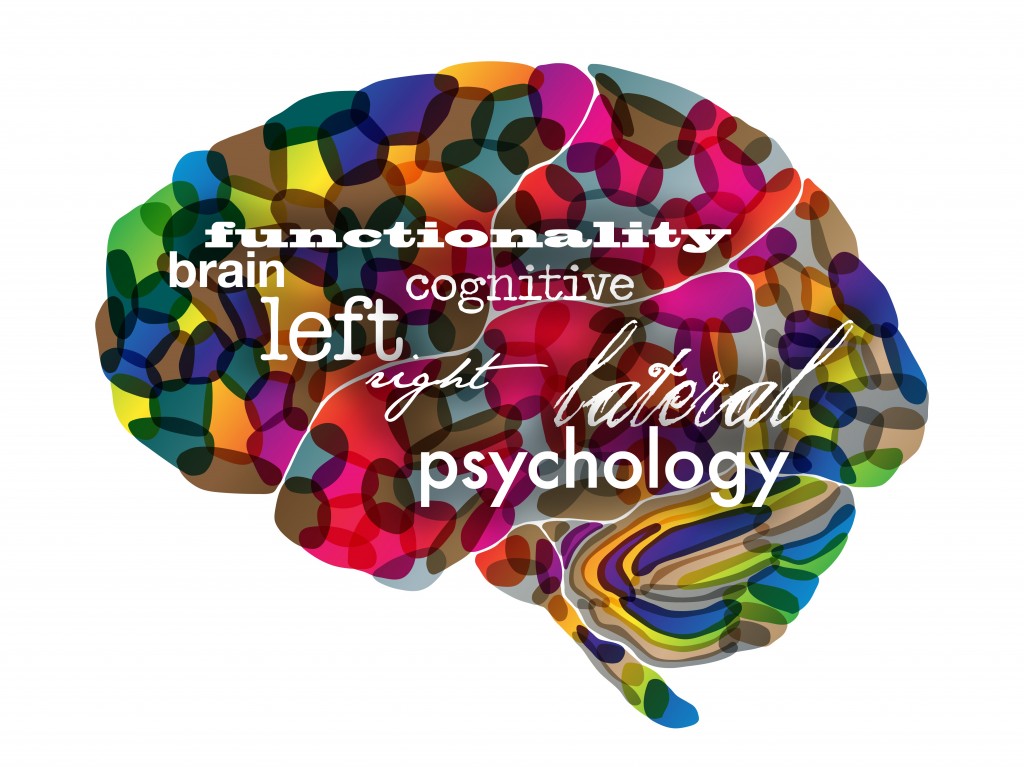
So, who are right brained people?
There is a lot of theory as to what makes the right brained person tick. According to my go-to source, Wikipedia: “The processing of visual and auditory stimuli, spatial manipulation, facial perception, and artistic ability are represented bilaterally, but may show a right hemisphere superiority.”
Of course, not everyone with a right brained tendency has the same behaviour and thought patterns. The same is true for those with a left brained tendency. Although, there seems to be enough common ground (or mind) that these hemispherical categorizations can and have been made.
What’s the point?
The point is, even with all the research, individuals with a right brained tendency are not that well understood. They don’t typically fit the mold. However, right brained thinkers have contributed to some of the greatest discoveries and creative masterpieces we’ve ever known.
A few likely right brained thinkers
- Thomas Edison
- Michelangelo di Lodovico Buonarroti Simoni
- Pablo Picasso
- Rembrandt Harmenszoon Van Run
- Walt Disney
- Nelson Rockefeller
- Hans Christian Anderson
- Leonardo da Vinci
- Sir Winston Churchill
- Benjamin Franklin
- John F. Kennedy
- Wolfgang Amadeus Mozart
- John Lennon
- Louis Pasteur
- Orville and Wilber Wright
- Alexander Graham Bell
- Ludwig Van Beethoven
- Thomas Jefferson
- George Washington
- Vincent Van Gogh
- Agatha Christie
- Ernest Hemmingway
- Mark Twain
- Anna Roosevelt
- King Gustav IV of Sweden
- Albert Einstein
- Marie and Pierre Curie
- Socrates
- Galileo Galilei
- F. Scott Fitzgerald
- Abraham Lincoln
- Steven Spielberg
Bottom line
Don’t underestimate those right brained people that you know. Perhaps they have more clarity of thought than you realize. And, don’t be surprised when they come up with a really good idea seemingly out of nowhere. I have the privilege to work with some exceptional creative thinkers who have strongly developed right brains. Do you?
What do you think about the theories surrounding right brained psychology?
by Christine Marr | Apr 12, 2012 | Branding, Creative, Design
Our reaction to colour is subliminal. As consumers, we are generally unaware of the persuasive effects of colour. Psychological effect is instantaneous, stimulating the senses and power of suggestion. We see it in every level of communication: in corporate identification and logos, signage, advertising on tv, billboards, in print media and packaging, on the computer and in-store. As we zip down isles in our favourite stores, our eyes rest on a package for approximately .03 seconds. In that blinking-of-an-eyelash timing, the packaging/sign/logo must rivet the observers’ eyes, inform them of the product, and, more importantly, appeal to their psyches.
I doubt I am saying anything new here. However, last week, we went to visit a client at their office and what happened there, prompted me to take note about colour and how we identify with it. We hadn’t been to Dentsply Canada’s office in a little over six months. As we walked through the door, the receptionist glanced up and said “…from 3H?”. Wow, that completely floored me. We make a point of always wearing purple when we see clients, because purple is the dominent 3H brand colour. This was enough for the receptionist to remember our visit from 6 months ago. We, at 3H, are strong believers in Brand Recognition!
We practice what we preach. While we clearly know and acknowledge that it takes much more than colour to build a brand… what you do with a “brand” colour clearly enables and facilitates brand recognition. Colours are so intimately associated with a brand that just the suggestion of a colour is enough to bring a brand to mind. That’s isn’t simply amazing… it’s awesome in building equity.
Think about this…
When you think of Home Depot, what colour comes to mind?
Which bank is “blue”, which one is “orange”, and which one is ‘green”? Close your eyes and picture the Google logo. The McDonald’s logo? And for my Canadian readers… what is meant by the “Windsor” blue.
Our reaction to color is instantaneous and this lens is a quick look at general responses based on research, historical significance of color and word association studies. Let’s take this one step further… picture the Home Depot logo, but with different words in the same font in the orange box… would you still recognize it? Would you see the logo as a whole, as one image, and recognize it instantly, associating it with Home Depot.
So when developing a brand and beginning with the basics of creating a logo… choose a colour that would represent your brand identity effectively for now and the future…And repeat after me….
Repetition, repetition, repetition… consistency… everywhere… all the time. Exposure over time ensures success….. but that’s a different point of discussion! Colour makes a brand stand out and command attention and make sure that the Logo colour matches your brand mission and message to create the brand identity you want.
So what do colours mean anyway? Here’s a brief overview.
Green occupies more space in the spectrum visible to the human eye than most colours. Green is the pervasive color in the natural world, making it an ideal backdrop in interior design because we are so used to seeing it everywhere. Green is considered the colour of peace and ecology.
Purple embodies the balance of red’s stimulation and blue’s calm. This dichotomy can cause unrest or uneasiness unless the undertone is clearly defined, at which point the purple takes on the characteristics of its undertone.
Blue is seen as trustworthy, dependable, and committed. As the collective colour of the spirit, it invokes rest and is calming.
Yellow shines with optimism, enlightenment, and happiness. Shades of golden yellow carry the promise of a positive future. Yellow will advance from surrounding colors and instill optimism and energy, as well as spark creative thoughts.
Pinks are youthful, fun, and exciting, while vibrant pinks have the same high energy as red; they are sensual and passionate without being too aggressive. Pink is the color of happiness and is sometimes seen as lighthearted.
Orange sparks more controversy than any other hue. There is usually strong positive or negative association to orange and true orange generally elicits a stronger “love it” or “hate it” response than other colours. Fun and flamboyant orange radiates warmth and energy.
Understanding colour and what they represent is important in establishing a brand persona. In today’s world of fast communication and overload of visual stimuli, it is more than vital that brand expresses its identity at the blink of an eye.
If you had to define your personality as a brand colour, what would it be?