by Belinda Lui | Jan 23, 2014 | Advertising, Latest
When companies spend $4 million on a 30-second spot during the Super Bowl — it only makes sense that they would also present teasers in the weeks leading up to the celebrated event to take place next weekend. The Super Bowl is exciting for football fans but it is equally as exciting for marketers and advertisers alike. Reinforcing the promotion of these advertisements with hashtags such as #fuelyourpleasure for Oikos Greek Yogurt ads featuring some of the cast from the hit-show Full House is only one of the ways that brands are building awareness amongst its community. You can preview some of these Super Bowl teasers on YouTube’s Ad Blitz channel.
Arnold Schwarzenegger was reportedly paid $3 million to appear in Bud Light ads during the Super Bowl. He is among many other celebrities who will make appearances in advertisements this year. While celebrity endorsements is nothing new to the advertising world, it continues to appeal to customers in ways they otherwise might not without them.
Still, Social Media is a major element in the marketing and advertising worlds today — and one method of tracking the success of an advertisement is how often a teaser video was shared, liked, or commented on. Statistics have shown that the engagement levels of Super Bowl ad teasers in 2013 more than doubled that of 2012. Talk about return on investment!
With that said, here are some of our favourite Super Bowl ads this year:
1. Volkswagen
2. Bud Light – with Arnold Schwarzenegger and Don Cheadle
3. Oikos
4. TurboTax
Oikos tapped into viewers’ nostalgia by using John Stamos, Dave Coulier, and Bob Saget as celebrity appearances. All of us who grew up watching Full House can relate to the familial support and greatness that was Uncle Jesse, humorous Uncle Joey, and the single father Danny Tanner. Great choice, Oikos!
What are some of your favourite Super Bowl ads (past or present)?
by Lisa Wedmann | Dec 19, 2013 | Latest, Social Media
According to Socialnomics, 40% of Canadians were using Facebook or Twitter by 2010. By 2012, almost half of the population had joined social media sites. In 2013, it is established 2/3 of Canadians now use social media. These are facts to be considered when strategizing for a brand launch.
These are numbers that brands just can’t ignore. They realize that they need to be on social media. So, without a lot of thought or planning, they decide to go all in. Next thing you know, they join Facebook, Twitter, Pinterest, Instagram, LinkedIn and Google+.
Then, reality sets in. Social media is not easy. Before jumping in, with both feet, brands need to take a step back and set up a clear brand launch social media plan.
Here are just a few of the steps that companies need to look at before jumping into the social media world in their brand launch!
Research
Who is your audience? What platforms do they use? When do they use them? Why do they use them? The more informed you are, the better the decisions you will make about platforms and content.
Objectives
Just as important as the research, you need objectives. What are your goals, short-term and long-term. Where do you want to go, and how does social media fit into your overall plan.
Create an Editorial Calendar
Plan out the year, then month and eventually the week. Include blogger campaigns, contests and posts. Then layer in all marketing plans since social media give you a chance to amplify promotions, from coupons, to charity campaigns to in-store promotions.
Be Social
Unlike traditional advertising, social media is not simply about putting a message out there. It’s all about the relationships! This means you need to engage, share and respond in a timely fashion. Being present will build the basis for strong relationship. It’s not just about the number of followers, it’s about the level of engagement!
Listen
And if we want to grow those engagement numbers, we can’t just keep talking. It’s important to listen, and really hear what your audience sharing and asking about. What are they concerned about.
Tell a Compelling Story
Social media allows you to tell a story that will create interest, engage your audience and build brand loyalty. Stories are compelling, and will draw in followers and allow consumers to connect with your brand.
Last, but not least, you need Patience! The followers and engagement, will come. But it will take time. And content. Lots of it! What is the one thing that you have found to be most important when launching a brand on social media platforms?
by Lindsay Sleightholm | Dec 18, 2013 | Advertising, Latest
As we all know, any retail brand that doesn’t get on board with holiday advertising is missing out. A lagging year of sales can be more than made up for within the last couple of months with a successful holiday campaign.
Since the 1920s, The Coca-Cola Company has been doing just that – and for good reason. The initial strategy was to position Coca-Cola as a year-round refreshment in North America, despite the fact that the drink, best served cold, isn’t what most would reach for during the holidays. The benefit of their strategy is twofold: Get people drinking a cold beverage during the winter, while reaping the rewards of holiday spending.
Today, The Coca-Cola Company is one of the best at emotive advertising during this festive time of year.
But how do they do it so well? Maybe it’s because of the product’s red and white branding that is synonymous with Christmas – the holiday that Coca-Cola primarily focuses their seasonal advertising efforts around. Or maybe it’s because the brand image they’ve built up over the years really focuses on relationships, sharing and happiness – all of the warm and fuzzy feelings that consumers crave this time of year. Or maybe it’s just because they’ve been doing it a little bit longer than most.
Rather than guessing, let’s take a look at some of the holiday advertising efforts from a brand that really knows how to capture our emotions and make the most of this retail season.
Santa Claus
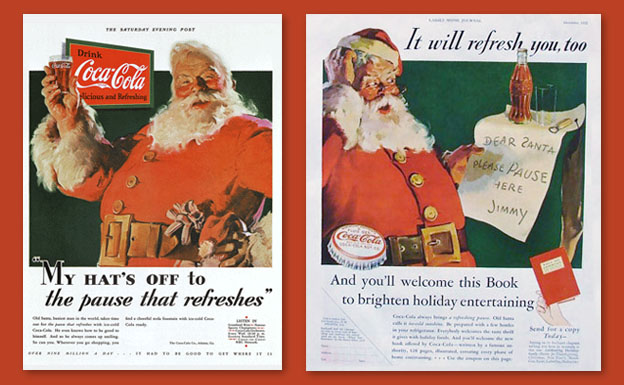
1931 marked the start of the Coca-Cola Christmas advertising campaign that would end up greatly influencing the image of the modern day Santa Claus. It was the interpretation of artist Haddon Sundblom, who was inspired by Clement Clarke Moore’s 1822 poem “‘Twas the Night Before Christmas”, that gave life to the Company’s jolly old Saint Nick. The Coca-Cola Santa could often be seen taking a break from his hectic Christmas schedule to enjoy a bottle of Coke.
 The Polar Bears
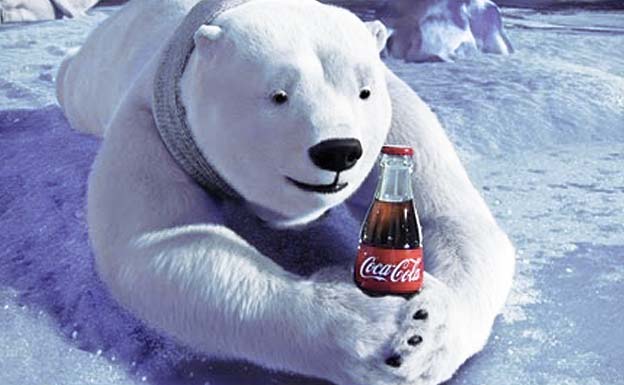
The polar bear image arrived within Coca-Cola advertising in the early part of the 20th century, appearing in print as early as 1922. Although, it wouldn’t be until 1993 that the cuddly white creatures really came to life, during the company’s “Aways Coca-Cola” TV campaign. With help from the vision of creative Ken Stewart, Coca-Cola was able to go one step further with the bears. Thanks to sophisticated computer animation, they were able to portray human-like personalities, while enjoying all the festivities of the Christmas season in the great white north – complete with Coke. “That’s really what we were trying to do – create a character that’s innocent, fun and reflects the best attributes we like to call ‘human,’” said Stewart.
 Holiday Caravan
In 1995, Coca-Cola took their holiday advertising to a truly on-the-ground level when they started rolling out a fleet of extra special delivery trucks, each decked out in Coca-Cola Christmas branding, lit up with hundreds of holiday lights and emblazoned with the phrase, “Holidays are Coming!” What started as a TV campaign now includes a rigorous agenda of actual trucks making stops at hundreds of towns around the world, with the aim of delivering some of the celebration of the season right to the consumer. For many, the trucks have now come to symbolize the official start of the Christmas season.
 After almost a century of making Christmas a top priority in their sales year, Coca-Cola has all-but cornered the market on holiday advertising. But it really doesn’t matter what you’re selling at this time of year. What matters is how you’re able to tap into the emotions of your market during the holidays. Whether you’re toting Christmas, Hanukkah, Kwanzaa or something much more holiday-neutral, what’s important is your approach to the message. If we’ve learned anything from Coca-Cola’s success, it’s that your message needs to be emotive, genuine, empathic, and it needs to appeal to everyone – from the uber-holiday enthusiast to the biggest cynic.
If you can tackle all that, your consumers will pay attention and your bottom line will reap the rewards.
by Miriam Hara | Dec 16, 2013 | Advertising, Latest
It really goes without saying that star power builds awareness. However, utilizing celebrities as part of a brand’s advertising campaign can be a double-edged sword. The more obvious reason is that stars themselves, especially in today’s landscape, are brands in their own right. They aren’t just actors or athletes, they too are responsible for their own brands and propelling it forward. As such, it is difficult for a brand not be eclipsed by the star’s own brand… and to stand apart from the star’s own persona. But it can be done:
No brand utilizes star power as well as Chanel No 5.
Chanel No 5 has always used star power to propel its brand forward; to constantly reinvent itself and to evolve with the times. In fact, star power is at the cornerstone of Chanel No 5’s brand persona. The 2013 ads for Chanel No 5 featuring Brad Pitt were very well thought out. It was a novel approach featuring a man’s perspective on Chanel No 5. With Brad Pitt, Chanel No 5 spoke to women on a totally different level than the ads that featured Nicole Kidman and yes, even Catherine Deneuve (1979 Chanel No 5 ad). Brad Pitt spoke to Chanel No 5’s target – women on a purely fantasy level.
Now, one year later, Chanel No 5 advertising, just in time for the holiday season, features the legendary star Marilyn Monroe. What a beautifully executed, thought-provoking and emotive concept. It speaks to women on so many levels — although I would say with confidence, it equally speaks to men!
From a design and purely conceptual level, the current Marilyn Monroe is no trend, embracing the retro trend. The film footage in black and white is beautiful to look at and the audio track adds nostalgia to the sexy persona that is synonymous with Marilyn Monroe. Highly emotive, the ad playing on every woman’s sexiness. With that one simple testimonial, “I wear Chanel No 5 to bed” unlocks the inner woman in every woman. What woman can’t relate to the idea of this self-indulgent concept, celebrating her independence and self-love!
So kudos to Chanel No 5… Much to my chagrin, I must say, “step aside Brad Pitt!”… after all, Marilyn Monroe provides to women something that Brad can’t offer: a feeling that is easily attainable. All they need to do is wear Chanel No 5 to bed!
by Belinda Lui | Dec 12, 2013 | Latest, Social Media
I’ve written several posts before on what to post, when to post, and how to post – but in this article, I want to discuss where to post. Which, admittedly, is just as important to identify as the other Ws of Social Engagement. Like most marketing efforts, there isn’t just one formula that works across all social platforms.
Noting this, here is an outline of some of the more popular platforms and the type of social engagement content that best suits their demographics:
Facebook:
This is probably the most liberal social platform for businesses in that you can post pictures, video, links, polls, etc. to engage users. Still, the most dominant demographic for this tool are women between the ages of 18-29.
Twitter:
For more detailed tips on increasing Twitter engagement, read my post here. Twitter actually has a more mature community, so the information (or the tone) in which you communicate should be tailored as such. The fastest growing demographic for Twitter are urban residents between the ages of 55-64.
Instagram:
This application wasn’t meant for hefty, wordy content. Instead of uploading a conspicuous sales pitch with a lengthy description, consider posting a well-positioned product in a picturesque setting for optimal impressions. The top demographic for Instagram are women between the ages of 18-29.
Snapchat:
With a younger demographic (13-23 years old) and a shorter attention span (pictures automatically delete after a timed option), businesses have the opportunity to tap into a new, uncharted territory with fast, impressionable images.
Pinterest:
With women in the lead, making up 80% of the demographic on Pinterest and between the ages of 25-34, this is probably one of the most gender-skewed platforms for businesses to consider when advertising a product or service. The same applies to this platform as Instagram: use a captivating image with a strong message and attach a link for interested users.
Having some clarity about the leading demographics and functions of these leading social platforms may help when deciding what, when, how, and where to post for optimal social engagement.
What are some of the creative campaigns you’ve noted that increases social engagement?
