by Belinda Lui | Nov 28, 2013 | Branding, Latest
I briefly wrote about the Hudson’s Bay in my article, “Retail Marketing: Be Seen and Heard”, but I wanted to elaborate on the genius that is behind the mass retailer. Bonnie Brooks didn’t only make The Hudson’s Bay a trendier shopping destination but her business strategy re-positioned the entire brand perception. Reinventing brands is something Bonnie Brooks is familiar with: she formerly worked as an executive officer at Lane Crawford as well as Holt Renfrew.
Reinventing your brand when it has reached a plateau can give it the fresh, sales-driven push that it needs:
1. Advertising:
Hudson’s Bay launched several radio spots to reinforce their brand using Bonnie Brooks’ voice as the spokesperson. This created a more personalized feel, given that it came directly from the President herself.
2. In-store Re-design:
Hudson’s Bay spent millions of dollars renovating the department stores’ interior layout for several locations. A lot of businesses may not immediately see the importance of dishing out obscene amounts of money for a refresh in storefront appearance, but Brooks did – and it’s paying off.
3. Demographic:
Carrying brands that would appeal to the younger demographic, like Top Shop, was a very strategic move on Brooks’ part. Expanding the target demographic would mean more traffic and consequently, more sales.
4. Partnerships:
Hudson’s Bay now carries what they call the “Canadian Olympic Team Heritage Collection” – being one of the oldest Canadian retail brands, making partnership with the Canadian Olympics Team is a great way to sell product nationally. The 2010 Olympic mittens made it on “Oprah’s Favorite Things” list.
5. Heritage:
Brooks didn’t only make Hudson’s Bay a must-go shopping destination for some of the best designer brands but she also brought back the appeal of Hudson’s Bay’s brand too. From couch throws to the classic teddy bear, it’s the Hudson’s Bay as a brand that she’s selling.
6. Logo:
There’s a new strategy in place so why not a new logo to identify with the refresh? Logos can be tricky – you want it to be eye-catching but you also want it to “speak to the heritage of the brand” – and that’s exactly what Hudson’s Bay has done.
Can you name another company that has gone through major reinventing that is worth mentioning?
by Lyndsey Loiacono | Nov 4, 2013 | Design, Latest
Designing Restaurants: It’s the outside that counts.
If there is one thing you should know about me, its that I have a huge obsession with food. Cooking, eating, watching food network, I love it all. Growing up in an Italian family and spending hours sitting around a table might have something to do with it. So when thinking of a good topic to share, I thought it would be best to combine my love with food and my love for designing.
I spent 2 of my best years living in Toronto where there are restaurants every where you turn. What makes Toronto a world class city is the diversity in restaurants, but how do they stand out from one another? It seems now more than ever a restaurants brand is as important, if not more important than the food they serve you. It’s your first impression from the outside that brings people inside. Designing a restaurant logo is only one factor in designing a strong and unique restaurant identity.
Here are some great examples of restaurants that got designing appetite appeal right…. from the outside in!
Weslodge, weslodge.com
This new on-the-scene restaurant in the popular king west area, has been branded as a “modern saloon”, with its impossible to miss canary yellow doors jumping right out at you. The interior is dark and feels like you have walked into a twisted pioneer hunting lodge with taxidermy filling the walls. Its logo has a modern back-woods feel to it and that canary yellow is shown very subtlety through menu design. What I love the most about this restaurant is how it celebrates it’s identity by the use of lights on the logo which separates this place from everything else on King west.

Caplansky’s Delicatessen, caplanskys.com
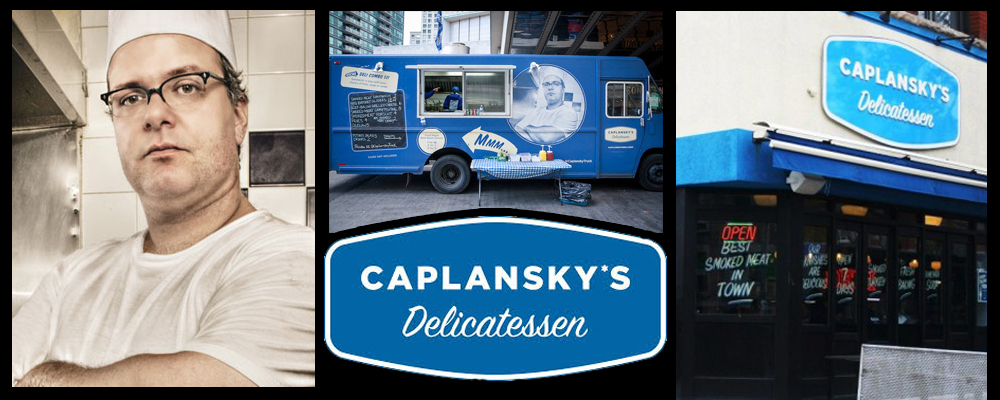
Oh so retro! Zane Caplansky is his brand as seen on the home page of his website dressed as a 60’s breakfast line cook, and good quality kosher food is his game. But before you go inside this eatery, it’s the outside that catches your attention. The retro throw back look is evident in the logo to the paint and design of the actual building. You feel like your looking back in time when your gazing at this place and in many ways you are. It’s simple yet forceful, establishing the Caplansky brand on the the corner of College and Brunswick for the past several years. To top it off, the Caplanksy food truck is a moving brand machine. Going to private events to food truck cook-offs, the proven look of the restaurant is arguably more powerful as a driving diner along the streets of the GTA.
Canteen, oliverbonacini.com
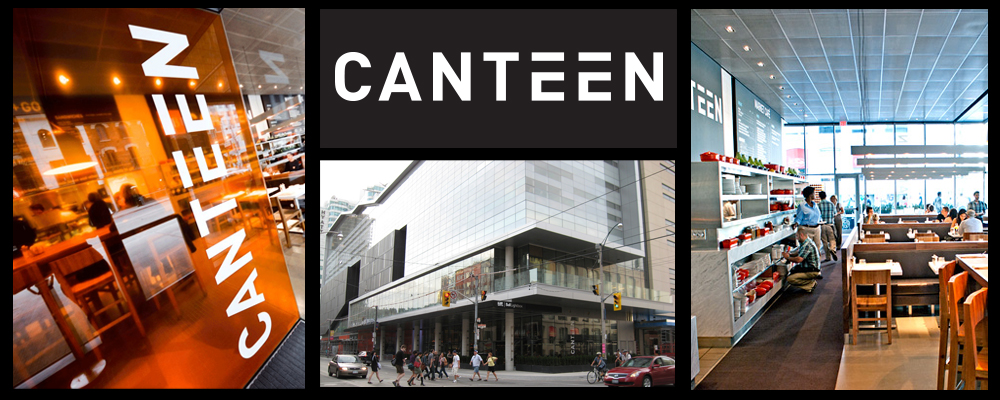
Location, location, location! Ok so were not here to talk about the importance of location, were talking branding. But there is no denying that a superb location is only going to help any company, especially a restaurant, by solidifying it’s brand to the public. Canteen, located in the TIFF building on King street is front and centre in terms of a restaurant establishing it’s identity in the heart of Toronto. The logo itself is what you might call simple. Clean and cut, it makes you think of what a space station eatery might look like but than it’s location in the TIFF building reminds you that this is no ordinary place to eat. The brand is established really by it’s location more than anything. Hollywood meets Toronto for the perfect place to buy an over priced pizza while looking good doing it.
by Lisa Wedmann | Oct 31, 2013 | Advertising, Latest
Advertising frequency is a huge component in the success of any campaign. Think about it: How many times do you need to hear a phone number in order to remember? Don’t answer… it’s a trick question. I have most of my numbers stored in my phone. Not sure about you but I don’t need to repeat phone numbers in order to remember. When I lose my phone or lose my contacts I am in big trouble.
In terms of new advertising and increasing awareness, most people need to repeat or hear an ad or communication three times before it registers. You can test it yourself. Take a name for example. A name that is not a person you know. Like Ryan Clarke. Repeat that name out loud three times. Chances are you will remember…at least in the short term.
Next week rolls around and you might not remember the name. But, if you see Ryan Clarke’s name repeated on Facebook, or an email comes around with this name on it , you might remember the name. Then you might forget … then again you might remember. That’s how building brand awareness works.
Effective Advertising Frequency
In marketing and in advertising, the number of times information is repeated before action is taken is called effective frequency.
There are many theories on what is the proper or correct advertising frequency you should aim for. The number of times you should repeat your information to your target audience is an important factor in the success of any advertising campaign.
There are many marketing theories on how and what strategies should be employed. Get to marketers in a room and each will think that their opinion is the best approach. But where they all agree is that advertising frequency is a must, the information or communications message must be repeated.
It’s not enough to run your ad up the flagpole and assume that your target market will drop everything and salute. Your ad isn’t on a flagpole and really, ads aren’t akin to patriotism. Repeat, repeat, repeat and your message will stick.
The first part of the above statement is obvious. Your message must be heard numerous times before your customer takes action. Marketing of any brand to build awareness must be an ongoing continuous effort in order to be successful.
The second part of the statement is not so obvious, unless you are a seasoned marketing professional. The matter of your messaging sticking is about creative approach, brand persona, media placement and creative strategy.
Approach your customer from different angles. Repeat the same message but repeat it on different channels. Think print, packaging, TV, radio, social media, events, pr and…
I can’t repeat that too many times.
Repeat uniquely, repeat creatively, repeat strategically. Then, your message will stick and your brand awareness rise to the top of the flagpole.
by Miriam Hara | Oct 28, 2013 | Branding, Business Success, Latest, Social Media
What is content marketing and how does it apply to building business and brand? A good way to start this conversation would be to reference the Janet Jackson song: “What have you done for me lately?”. Content marketing involves imparting information and knowledge with no expectation of return. In other words, it’s about giving back. Really? Really!
How do businesses go from a mindset of selling to one of guidance with no real concrete ROI? We all hear a lot about business relationships today. Business relationships have always been at the cornerstone of business success. What has evolved is how these relationships are being built today.
- It’s all about Google.
Gone are the days of brochure websites. Now websites need to perform by offering fresh and current information to get on the Google radar – that’s a good thing. The benefit of getting on the Google radar is that you’ll see your website rank go up. Content marketing assists in doing just that. Essentially you want your business to get found by your target when they are looking for your product or service. And there’s a strategy to developing this content, however that will be for another post.
- Websites are the first impression.
You know the old sales adage, “get your foot in the door”? That hasn’t changed over time. Although now a website is the window to building sales. Leveraging knowledge just makes sense. Having forums and relevant content on your site adds credibility. (See my recent post on Websites 2013: Maximizing Performance). And rather than you calling, with the hopes of turning that cold call into a warm call, prospects can and will reach out to you. So to completely leverage that content, be sure to have a prominent and visible “contact us” mechanism.
- Spread the word and increase your reach.
Content creation is a lot of work. And you need to keep updating the content on your website. So it is important to maximize the footprint of each “knowledge bite” your business imparts. Equally important is sharing it on social media platforms that link back to you site. (ie: LinkedIn, LinkedIn Groups, Digg It, StumbleUpon). Continuous momentum of content marketing will start establishing your business by building the foundation for forming relationships.
Everyday there’s something new in the social media arena (or at least it feels like it). Understandably, it’s hard for businesses to keep up in the quick evolving nature of the marketing landscape. Couple the speed of this evolution with the lack of real expertise to navigate through these changes and businesses are finding themselves in a very challenging position. But challenges have always been what marketing has been about. Are you up for the challenge?
by Miriam Hara | Oct 21, 2013 | Branding, Business Success, Latest
Where is brand awareness today?
Many marketers and business executives don’t value brand awareness as much as they did a decade ago. Some say it’s a thing of the past while others insist that it’s alive and well. For those who are in the former camp, I would urge them to think again. Investors put a lot of stock (excuse the pun!) in brand awareness. In fact, it plays a significant role in determining whether or not they will support a product or company.
Brand awareness is no longer about yelling the loudest and longest. Now it’s really about breaking away from the clutter to make your brand impression count.
Rather than trying to convince non-believers that brand awareness really does increase ROI, the aim of this post is to carve out what the building blocks of brand awareness are in today’s multidimensional market environment.
Be different: In order to develop brand awareness you need to provide your consumer base with something to remember and want to talk about. Your brand needs be solid and stand out through its brand persona, premise and brand positioning. It’s not enough to just talk at people anymore, brands must engage and interact with their audience. This is becoming increasingly important for building solid brand awareness. In order to do that, your brand needs to establish a voice and tone.
Get found: It’s important that your marketing strategy includes a strong SEO component. This should include a comprehensive online advertising campaign or a google keyword campaign.
Be engaged: One of the marketing channels available to us now is social media. How effectively you use this channel can mean the difference between success and failure. So it’s important that your marketing plan include a social media strategy in order to increase engagement and build upon your other SEO initiatives.
Be holistic: Don’t just rely on new media, make sure you have a good dose of traditional media too. I often laugh when people say, “Traditional media is no longer effective”, especially when I come across 30 second TV or radio ads urging me to go to Facebook and “Like” them! And yes, you’ll also find the same message in print media. But regardless of what channel you choose to communicate in, make sure that all your communications tactics drive your point of contact to the same place.
Be consistent: Don’t rely on a one hit wonder, especially with branding! It takes a solid, consistent commitment to build brand awareness. The good news is that with social media, relative to traditional media, being “out there” doesn’t necessarily take a lot of money – but it does take a lot of time and planning.
Be website ready: There’s nothing worse than having your audience listen and engage with your brand only to direct them to a website that isn’t primed to take advantage of that opportunity! First impressions count. And in today’s environment, that means your website has to perform well by creating a positive experience to potential consumers and customers.
How do you feel about building brand awareness in the current market conditions? And what have you done to outperform your competitors?
Please share your thoughts here…
