by Miriam Hara | Aug 8, 2025 | Advertising, Agency, Business Success, Creative, Design
Unmistakably Purple
If voice shapes how a brand sounds and represents, its visual identity is how it’s remembered. In a world crowded with choices, visuals are strategy, personality, and first impression all at once. For my business... my brand, that unforgettable visual identity begins with one unexpected colour: purple.
The Layering Approach
An unforgettable visual identity is never just about what looks good on a page. It’s about crafting patterns, moments, and details that make an impression before you’ve said a word. It embodies and propels forward the brand's logo while carrying the momentum to social media communications, and advertising.
When I considered what would signal my business to the world, I started with the simplicity of a my business' visual identity. I started with a colour that was unexpected 37 years ago. It was a colour that was rarely seen or utilized in the business world yet oddly traditional. It was a bold move in the seas of grey, blue and burgundy. Additionally, I wanted a colour that sparked curiosity, commanded attention, and reflected the kind of creative courage I bring to every project.
Why Purple?
Purple wasn’t chosen by accident. It’s the signature of my brand for a reason. Throughout history, purple has signalled creativity, originality, and even a little bit of rebellion. It’s confident, distinctive, and unapologetic just like the brands I love to build. And let's not forget...purple is often associated with courageousness...with braveness.
Albeit, purple is also personal for me. It reflects imagination, a bias toward bold ideas, and a commitment to standing for something unique, not just what’s expected. It’s the heartbeat of every piece of creative, every campaign, and every brand moment we deliver.
Consistency Creates Confidence
Of course, visual identity is about more than just one shade. It’s the patterns, rhythms, and small details that turn colour into memory. Purple is the visual thread that runs through our brand. It appears in the logo, the website, event booths, even the energy of the team.Consistency is a competitive advantage. I want people to feel the brand before they even know it’s us.
Purple invites a double take. It stands out in a sea of sameness and, in our world, that matters. Clients and potential clients alike, take note of our brand colour. Unbeknownst to them, from the very first hello, we are already having a brand conversation. One that enables us to really show what we can accomplish for their brands. The use of purple is very intentional.
Visuals That Speak Volumes For My Clients, Too
Many of the brands I work with are navigating complex, crowded spaces; health, innovation, food, lifestyle, and legacy industries that can feel overwhelming and even feel a little sterile. For them, standing out isn’t just a luxury; it’s survival.
When I and my team are given to develop an unforgettable visual identity... it isn't only about colour. It's about being unexpected...and whatever that form takes. We aim to make their message impossible to ignore and giving their brand sense of confidence and cohesion that transcends vehicle. Confidence in their communications, advertising and of course, confidence for their sales force to articulate what needs to be. The visual identity is the springboard for which all brand communications (digital, print, sales) take flight. Clients have told me that our creative choices, especially the signature visual elements, help their brands claim space, spark conversations, and signal that they’re not afraid to lead.
When someone is exposed to one of my businesses' campaigns or walks into our office, I want them to feel that spark. Purple makes sure they do. It’s a colour that opens doors, starts conversations, and makes the brand unforgettable not just for me, but for every client I have the privilege to work with.
by Miriam Hara | Jul 8, 2025 | Advertising, Creative, Marketing

The importance of asking What If?
What if? It’s a small question, but one that has shaped some of the most memorable brand moments in recent history. It opens the door to creative freedom, to alternate outcomes, to ideas that move a message beyond expectation. Not every great idea begins with a plan. Sometimes, it begins with a possibility. A simple question asked at just the right moment. One that doesn’t look for confirmation, but for expansion.
In marketing and branding, asking What if? is about formulating vision. It invites us to imagine something just outside our usual frame and to explore how to bring it into view.
What if? invites us to challenge assumptions
Most briefs are built on a defined problem and a set of guardrails. They are written to sharpen focus. But sometimes, they also limit possibility.
Asking What if? allows a team to to imagine up to the fringe of those parameters and possibly step just beyond those edges. It offers a way to reframe the assignment. What if the product is not the hero? What if the audience is broader than we thought? What if the solution lies in the opposite direction?
These questions do not suggest that strategy gets thrown out. Instead, they keep it fluid long enough to explore the territory that often gets overlooked.
When asked early, What if? prevents ideas from settling too quickly. It keeps curiosity alive and creativity honest.
Imagination makes space for innovation
The best ideas rarely arrive fully formed. They begin with exploration. They need time to stretch before they take shape. What if? gives them that space.
Consider Apple’s early marketing shift. Rather than focusing on product specs, they asked a different question. What if we spoke to the creative spirit behind the user? That led to Think Different, a campaign that didn’t describe the product, but elevated the mindset of its audience. That shift in focus became a cornerstone of brand storytelling. It worked not because it followed the rules, but because it imagined something better.
What if? makes room for that kind of thinking.
Curiosity opens doors that research can’t
Strategy often begins with what we know. Research, insights, data are the tools that ground us. Imagination, however, is what helps us leap.
What if? lets us ask questions that the data may not suggest, but that the audience might feel. What if our brand stood for more than its category? What if we stopped trying to win attention and earned trust instead?
These are not ideas that come from spreadsheets. They come from creative confidence. They come from a willingness to explore before locking into the familiar.
What if? makes the process more collaborative
In a creative environment, What if? is one of the most inclusive questions you can ask. It lowers the pressure to be right and raises the potential to explore. Everyone gets to contribute. Everyone feels invited in.
It also softens the edges in feedback brainstorming sessions. Instead of saying no, teams say What if we tried another way? That shift changes the tone from evaluation to exploration. From critique to conversation.
In the long run, it builds better work. Because it builds better culture.
Asking What if? leads to stronger ideas
No brand finds its edge by repeating what already works. It finds it by testing the limits. That does not mean being reckless. It means being open.
When teams ask What if? they find room to pivot, to reimagine, and to reset. They create the conditions for breakthroughs, not by forcing them, but by staying curious long enough for new paths to emerge.
What if? does not ask for perfection. It asks for possibility. And possibility is where the best ideas begin.
Ready to start? Lets chat!
by Miriam Hara | May 27, 2025 | Advertising, Creative, Design, Marketing

Defining Design Strategy
After over 36 years at the helm of 3H Communications, there are certain truths in our profession that have endured the test of time. Creative concepts aren’t pretty pictures… and design isn’t decoration. When design lacks intention, it will be sure to miss the mark. Every curve, every hue, every seemingly simple design choice happens by the exercise of expertise and free will.
Whether it’s making the bold choice of a deep indigo, the placement of a logo, a typography selection or the subtle curve of a package corner, every decision carries weight and purpose.
Behind every great design there is a rationale. A thought process that bridges creativity with strategy.
Marketing of Design.
Design strategy articulates what must be visually contextualize. What are we trying to achieve? Who are we speaking to? How will this design help us get there? It sets to align the visual elements of a brand with its mission, values, and goals. It takes abstract ideas and transforms them into visual articulations that are compelling, working together cohesively to tell a story and drive action.
Without strategy, design risks becoming a disconnected series of aesthetic decisions. Ultimately nice to look at, missing the mark in becoming a powerful tool for communication, differentiation, and long-term brand equity.
Ask ‘Why’ Always.
Think like a 3 year old and continuously ask Why? Why this shape? Why this texture? Why this spacing? Every answer must add to the bigger picture, whether it’s solving a problem, evoking an emotion, or influencing behaviour.
A curve on a package may very well be visually appealing, but it just might be about making it easier to hold or subtly creating an organic flow that aligns with a natural product promise. A colour isn’t just a shade, it’s a signal. It can calm, energize, or provoke.
Design Driven by Intention.
When intention leads design, it shows. It feels cohesive. It feels confident. It simply works well. At 3H, design intention is simply our process.It’s not just about how something looks. It’s about why it looks that way. Brands that endure do so because their design foundations are executed properly. Design strategy catapulted by intention ensures that even as trends shift, the core brand message remains intact.
Why It Matters.
We already live in an over-saturated world where consumers are bombarded with visual stimuli every day. Design without intention is noise. But design with intention? That’s where magic happens.
At 3H, our philosophy is simple: design is a strategic tool. Every project, no matter how big or small, starts with intention and is guided by rationale. We design with purpose. And in a world that’s always looking for the next big thing, that makes all the difference.
by Miriam Hara | Mar 28, 2025 | Business Success, Marketing
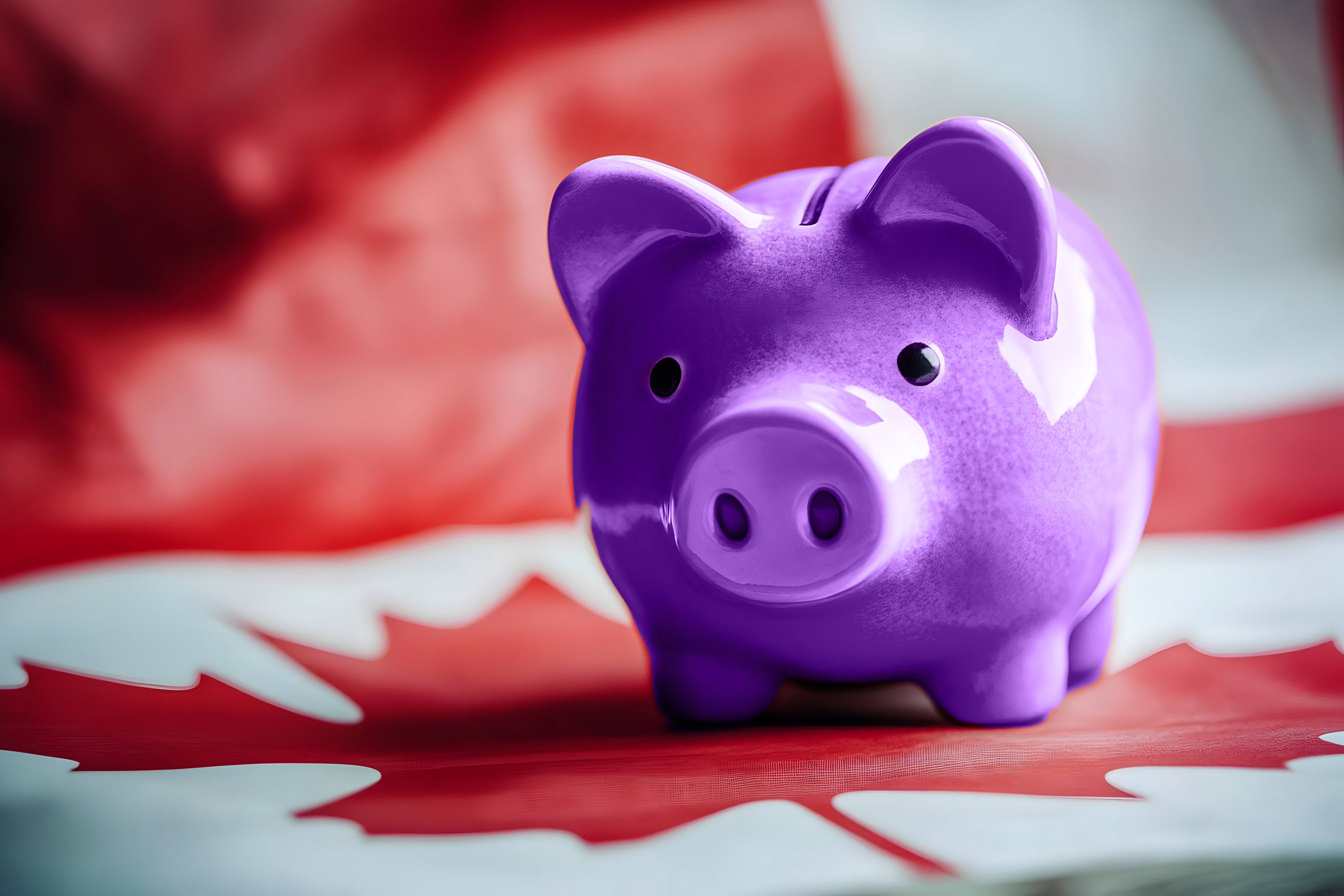
Canada Local, buying into it is trending, imagine that! That’s one silver lining in all this chaos and craziness with our southern neighbour. Canadians are finally waking up to the power of buying Canadian. We’ve always had the resources, the talent, and the ingenuity to thrive. But for too long, “buying Canadian” has been more of an afterthought than a movement. That changes now. Because when global forces shake us, we don’t crumble, we double down.
Buy Canada Local: Understanding the various Maple Leaf Labels
In the frenzy of supporting the Canadian economy and Canadian businesses, let’s get clear on what’s actually made in Canada. Those tiny labels on the packaging? They matter. Here’s what they really mean:
-
“Product of Canada”: Think more than Maple Syrup Ontario or BC Wines. Any home grown local business falls into this category, artisans, entrepreneurs and that are regionally, provincially or nationally minded, in both in packaged goods and business to business. You can’t get more Canadian than this. This means 98% or more of the product’s total direct costs, including ingredients and processing, originate from Canada. If you want to truly support Canadian farmers, manufacturers, and suppliers, this is the label to look for.
-
“Made in Canada”: A little looser. The product was manufactured or processed here, but the ingredients? They could be from anywhere. However, at least 51% of the total direct costs must be Canadian. A step in the right direction, but not quite homegrown.
-
“Prepared in Canada”: The most flexible of the claims. The product was assembled or cooked in Canada, but most of its components were sourced globally, including the USA. But it also means that being prepared here… provides and optimizes Canadian jobs.
Bottom line? If you want your dollars to matter and fuel Canadian businesses, “Product of Canada” is your best bet.
The Brain Power Behind the Maple Leaf
Canada can take a page of the hundreds of individual self help and validation books! As a country we really don’t value what we are all about, looking always for validation externally. Our humble-nous has been so ingrained we’ve lost the ability to recognize our true strength and value.
The real problem? We haven’t fully embraced ourselves yet. And that’s where the real identity crisis begins.
We are the first to acknowledge our worth in terms of raw materials and of course, natural beauty. But Canada is a powerhouse of innovation, creativity, and entrepreneurial grit.
Think Shopify, a homegrown e-commerce titan that’s revolutionizing online retail. Or DeepMind, the AI powerhouse with Canadian researchers driving global advancements. Even Cirque du Soleil, an international entertainment phenomenon, was born out of Canadian creativity.
It goes without saying our sense of humour is second to none, having provided millions of people with the best laughs with the most awesome comedians.
From AI and biotech to sustainable manufacturing and entertainment, we have been at the forefront of some of the most groundbreaking industries in the world. But unlike other nations that shout about their accomplishments, Canada tends to shrug it off and blush.
It’s time to change that.
When Buy Canada Local… Really isn’t
Think about it. Some of our most iconic brands we’ve all grew up with, aren’t actually Canadian-owned anymore.
Hudson’s Bay Company: A Historical Past owned by the USA
Founded in 1670, Hudson’s Bay Company (HBC) is North America’s oldest company. It practically wrote the book on Canadian commerce. But in 2006, American businessman Jerry Zucker acquired HBC for $1.1 billion. Two years later, NRDC Equity Partners, another American firm, took over. It may still feels Canadian. But its ownership says otherwise.
Tim Hortons: More American Than You Think
Tim Hortons—the brand that fuels our hockey rinks and morning commutes hasn’t been fully Canadian for years. In 2014, it merged with Burger King under Restaurant Brands International (RBI), a Canadian-American multinational. Yes, RBI is headquartered in Toronto, but its corporate roots run deep into American soil.
So, next time you grab that double-double, know that while the nostalgia is ours, the ownership isn’t.
Buy Canada Local Your Purchase Statement
Every dollar spent on Canadian products is a direct investment in our economy. It creates jobs. It sustains industries. It ensures that the families who grow, manufacture, and innovate here continue to thrive. And in a time when economic uncertainty looms large, that kind of impact matters.
This isn’t about waving flags or blind patriotism. It’s about making choices that keep our economy strong, our communities thriving, and our identity intact.
The Silver Lining
Trump’s tariffs may have set off alarm bells, but they also sparked something else: realization. We don’t need to rely so heavily on imports. We don’t need to play by the rules of an unpredictable trade partner.
What we do need? To recognize that Canada has its own rhythm, its own strength, its own identity. We’re not just an add-on in the global economy. We’re a force.
So, Elbows Up. Choose Canadian. We all have a part in making this time a turning point in Canada’s history.
by Miriam Hara | Mar 11, 2025 | Advertising, Agency, Marketing

Test Marketing Needs a Great Concept
It’s always exciting being part of something new. To have a brand venture into a new territory. Reaching out to new audiences with a brand is bold. Often, media costs and full outreach takes dollars… and that’s where test marketing comes in. Suddenly everyone’s talking numbers, timelines, and geographic reach. SO what about the creative?
If you’re rolling out a test market without fully investing in the creative, you’re not testing your brand’s true impact. You’re just guessing. And guesswork has no place in serious strategy.
The Pitfall of Ignoring Creative
When implementing a test market, the focus is often on logistics: which channels, which regions, and what budget. Those things matter, for sure.
But here’s the thing: they only matter if your creative concept is strong enough to deliver
We all know this: creative isn’t just a pretty picture or window dressing. It’s the most essential element in any campaign. Creative is the core of your brand message. It’s what your audience will see, feel, and remember. Skipping over creative development, whether to test a channel or save budget, is a costly mistake.
Think of it this way: placing a “meh” ad in prime real estate is like putting up a billboard with a dense paragraph of unreadable copy. Sure, your brand is in the right place, but without compelling creative, it’s not going to grab attention or make an impact.
“Good Enough” Isn’t Good Enough
Think of it this way. You’re trying a new channel, like TV, radio or digital, to reach new audiences. These are people who may not be familiar with your brand. What kind of impression do you think a lack lustre ad will make?
Test marketing is about seeing if your idea can resonate, but resonance starts with a strong, compelling message, and that’s all about the creative, not the media. (albeit, they need to go hand in hand).
Half-hearted creative efforts lead to muddled results. Instead of testing the potential of your idea, you’re testing a watered-down version of it. So when that version fails to connect, you might assume the whole idea doesn’t work, when the real issue is that you didn’t give it the chance to shine.
Test Marketing isn’t Tactical
It’s tempting to think of test marketing as a purely tactical exercise. You’re testing TV vs. radio, or digital vs. print. But here’s the truth: channels don’t sell ideas, creative does. The channel is just the stage. The performance rests on your creative concept and execution.
If you’re exploring a new medium, your creative has to adapt without losing the core essence. TV needs visuals that captivate. Radio requires messaging that paints pictures with words. Digital demands agility and interactivity. Print needs to speak volumes. Regardless of the channel, all creative adaptations must be remarkable and memorable. The best campaigns understand the nuances of each channel and craft creative that works within them while staying true to the brand.
Test Marketing: Show Up Like You Mean It
Your test market audience doesn’t know they’re part of a test market. For the audience, this is the first impression of your brand. And if you show up with “just good enough” creative, that’s the impression they’ll walk away with. Think of test marketing as opening night for a smaller crowd. You’re not rehearsing; you’re performing. Show up like you mean it.
Creative Is the Test
So the next time the you’re working on a test market initiative, pause and ask: is the creative ready? Is it compelling? Does it reflect the brand’s essence and true personality? Without great creative, you’re not testing your campaign’s potential. You’re testing what happens when you don’t take your own idea seriously.
Test marketing is a chance to learn, refine, and validate. But to get real insights, you need real effort. Don’t just dip your toes in the water. Commit full on. Dive in with creative that makes waves!