by Madi Secareanu | May 24, 2012 | Advertising, Branding, Business Success, Interactive
Website copywriting is an art of its own. Although it contains some traditional elements, it’s very different than blog writing, editorial writing, ad copywriting….you get the idea. However, more often than not, some brands/companies and even self-proclaimed professional writers don’t see this distinction. Here are the most common web copywriting mistakes:
1. Too much copy
This mistake often steers visitors towards the Close button. Too much copy can be overwhelming. The lead should be up front, important information such as who you are and what you do should be easy to find. Now, I know some of you might be thinking that you need a lot of copy for SEO purposes, but that’s not all true. Yes you need to have more than a sentence or two, but even that one sentence, if it contains the right SEO-friendly keywords, can be very effective. Copy should be clear, concise and to the point and SEO optimized.
2. Unorganized copy
Closely related to the “too much copy” issue, this again can cause visitors to steer clear of your site. If your copy isn’t organized and just plopped in without a method to the madness, your site will not perform the way it should. The site-map and navigation should fall under the copywriter’s responsibility – web copy needs to not only read well, but it needs to flow and navigate well too.
3. Not SEO optimized
I touched on this in first mistake but let me expand. SEO is important for website performance and it should not be ignored when writing web copy. Utilize search engine key word tools and look for terms that you should be using in your web copy. Don’t forget the meta tag titles and descriptions – they provide the hook in search results that could turn a search into a visit.

4. No benefits
Similar to advertising, web copy should reflect the benefits of your brand or service. What’s in it for your customers? Why should they choose your brand/service? What do you have that your competitors don’t? Your website can often be your first selling feature, and if you don’t have the benefits outlined you could end up losing out.
5. Not focusing on a target market
Whom are you speaking to? Web copy should speak to your clients and what they need – tailor the message. It’s not enough to simply introduce your brand/service – you have to also talk about what you can do for your clients. There’s a difference between “we offer this” and “we offer YOU this”. If you’re talking to your brand/services more than you’re talking to your clients, your copy needs a refresh.
These 5 mistakes seem like common sense but just take a look around the web, and I guarantee that there’s no shortage of websites that fall victim to at least one of the afore mentioned web copy no-no’s.
Do you have any examples of poorly written sites that we could all learn from?
by Madi Secareanu | May 17, 2012 | Advertising, Branding, Business Success, Creative, Interactive, Social Media
The other day my colleague Lindsay shared a story with us about Klout, a service that measures your online influence and gives you a score between 1 and 100. Apparently it’s been getting people up in arms! It seems to have the power to make or break careers, brands and social statuses …but how and why does this service and your score have so much power?
What is Klout and the Klout Score?
Simply link up your social media accounts to Klout and the Klout Score measures influence based on your ability to drive action online. Every time you create content or engage online you influence others. The Klout Score basically tells the world how influential of a social networker you are through your:
- True Reach: How many people you influence. Klout looks at who acts, shares and responds to your content.
- Amplification: How much you influence others. To attain this, Klout looks at how many people and how often people respond to your content.
- Network Impact: The influence of your network. Klout looks at how they share and respond to your content.
So, what does it mean?
Well, the easier answer is that your Klout Score determines if you’re an online influencer or not. So what does that mean? Well, as a top influencer you are eligible for Klout Perks (free stuff from brands), you’re considered a “somebody” and your resume might get a bit of a boost. As a brand, you can leverage top influencers to generate buzz around your brand (more on this below).
So, what’s a good score?
According to Klout, influence is relative and depends on your goal and peers. The average Klout Score is around 20. Klout also makes it exponentially harder to increase as you move up the scale. They say that it is much harder to move from a 70 to a 75 than from a 20 to a 25, making sure top influencers are working hard for their high scores.
Good for Business?
Brands can leverage Klout Perks, use Klout to measure their own influence online and identify brand influencers.
What are Klout Perks?
Klout Perks are exclusive products or experiences that influencers can earn based on their Klout Scores. Perks enable brands to connect with influencers – people whose friends or social networks look to when choosing what brands to engage with. Giving influencers Klout Perks means they have to talk about your brand – what they say is up to them.
The debate
People seem to love or hate Klout. Common criticisms include:
- But…offline influence doesn’t have a score?
Sure, offline influence doesn’t have a score but most individuals are influential only to a close network of friends, and maybe their friends. Unless you’re a celebrity, us “regular” folks don’t seem to have much impact offline. With Klout, anyone can become an influencer, a “somebody”, if they make enough noise.
- Brands are giving customers preferential treatment!
For brands, using Klout to leverage top influencers has several benefits. For one, if you compare it to the offline world where it’s nearly impossible to identify offline influencers, using Klout makes it easy to identify those who will champion your brand. Turning customers into advocates with Klout allows brands to go beyond the review or testimonial.
- The Klout Score is giving me anxiety!
How, what, who…huh? The way Klout measures your score can cause some anxiety. In fact, they changed their original algorithm not too long ago, lowering some people’s score. It’s not just about how active you are….but how active your network is….how active is your network’s network and so on! Should you go to extremes and only choose to follow or friend people based on their influence to help increase yours? What does your high or low score really mean? Some really take their Klout Scores very seriously…and rightfully so. In some cases, high scores do come with some great benefits (Perks!).
- It has too much power!
That it demands some power over your life and your career is a cause for concern for some. Recently, I heard about a man who didn’t get the job he wanted because his Klout Score was too low. Are experience, education and capability no longer enough? No. Not in this day and age. I’m not saying that your Klout Score should dictate whether you will land a job or not, in fact I find its consideration a bit distasteful. But I do think that as marketing, communications and creative professionals, choosing to not participate in social media, as a whole will no doubt close a few doors.
I want to know, where do you stand on Klout? (oh..and what’s your Klout score?)
by Lindsay Sleightholm | May 15, 2012 | Advertising, Business Success, Creative, Design
As creative professionals, we all know that it’s not always easy to communicate the thinking behind design solutions to a client. There are several reasons for this. If it’s a new client, they may have yet to trust your expertise, or you have yet to earn their trust. Another scenario, is that the client may not have enough experience or knowledge of design and branding. Lastly, it could be because the creative you presented pushes the client beyond their comfort level.
No matter what the reason, there are going to be times when you need to make that extra effort to communicate just exactly why your fantastic concept is so… well, fantastic. Chances are, if the client is reluctant in any way, you won’t sell them on the idea. So, in order to avoid going back to the drawing board, try to minimize the margin of error with better client communication.
Here’s 5 tips to maximize your client communication…
1. Start with the basics.
Refer back to the brief. Knowing and having an understanding of the goals the client had in mind is crucial to achieving a solution. Reiterate what was first given as the creative and strategic mandate and tie it directly into the creative solution you’re offering. After that, explain the thinking process that took place for you to reach your creative solution.
2. Don’t use too much design lingo.
Many clients don’t have a background in marketing or design, so it’s best to refrain from throwing out terms that the client may not be familiar with; it’ll only lead to more confusion and frustration on their part. Instead of talking about hierarchy, typography, negative space or Gestalt principles, express these intentions in more universal terms like “focus,” “eye path” and “emphasis.”
3. Show it.
Most clients – and people for that matter – are much more inclined towards visuals than words. Present clear, polished creative options to your client. But don’t just leave it at one solution. It may require a lot more legwork, but an effective and professional client presentation means providing multiple options. As we as creative professionals know, there’s always more than one way to achieve a solution. Give your client the opportunity to see those other options.
4. Throw in a little 101.
Although you don’t want to overwhelm them with industry jargon, you do want your client to get a peak at the method behind the madness. Sometimes that means educating them about the principles of design and the strategy behind the marketing. If your client doesn’t understand these strategies or principles, try explaining it to them. But again, break it down into ideas and terms they can relate to.
5. Listen and address concerns.
Sometimes the brief may have been followed to a ‘T’, but ends up not ringing true for what the client actually wanted. In that case, ask questions and listen to the answers. What’s not working for them? How are your concepts different from what they expected? Dig around a little and find out where you and your client’s thinking differs. It may mean taking a step back to reevaluate the goals and possibly reworking the creative. But it’s important to realize and respond to these concerns so you have more effective communication in the future.
Bottom line: The communication you have with your client can make the difference between a good relationship with them or a bad one. You want them to trust in your expertise. The easier you make it for them to do that, the better it will be for you both. However different your backgrounds may be, finding that common ground will allow for the possibility of greater success on both sides.
What other tips can you share about successful client communication?
by Madi Secareanu | May 8, 2012 | Advertising, Branding, Business Success, Creative, Interactive
It’s happened to all of us. We’ve been on Facebook posting something on a friend’s wall about a specific interest, like tennis, and the next thing you know Facebook is showing you an ad about tennis rackets. That’s the power of Facebook ads – it lets brands engage and target people based on interests – what they’re talking about and what they like.
Facebook ads can be a very powerful tool to help to generate interest, brand recognition and brand loyalty. It can be an advertiser’s dream – targeting using the information people willingly share with others or enter in their profiles. But it’s important to know the ins and outs of advertising on Facebook before you get started.If you’re planning on launching a Facebook advertising campaign, here are some things to keep in mind before you get going.
- Identify your goals
What do you want to achieve? Is a Fecbook advertising campaign the right strategy? Do you want more likes on your brand page? Do you want to get people to enter a contest? Do you want to drive brand awareness? Do you want to acquire new sales leads? Your objective defines your strategy, so make sure you know what your goals are before launching your campaign. Make sure to establish your objectives prior to launch but be prepared – with Facebook the strategy may vary throughout the duration of the campaign.
- Know your audience
Who do you want to reach – who is your audience? Think about what categories your customers fall into. Not only define them by demographics… dig deeper than that. Knowing your audience well lets’ you target your ads more effectively by tailoring your imagery and your copy to get your target audience’s attention.
- Set your budget
Set a clear budget as you would for all advertising efforts. Identify how much you want to spend daily or during the ad’s entire lifespan and identify your cost per click or cost per thousand impressions bid. How much are you willing to spend? What’s your strategy? Should you initiate a cost per thousand (CPM)or a click through(CTR) campaign.
- Know the rules
Get to know Facebook’s advertising policies and approval process. You’ll find useful information on what you can and cannot advertise, say or show. Knowing the guidelines before hand will lower your ad’s chance of getting disapproved or shut down.

Now, you might be ready to launch your Facebook advertising campaign, but don’t know if it’s going to be a success. It’s always hard to forecast if an ad is going to be successful or not, but if you know your audience well enough and you have a clear objective and a well-defined strategy, you can help improve your ad’s success rate. Here are a few useful tips on creating more effective Facebook ads:
- Copy is key
Develop to-the-point copy that grabs your viewers’ attention. Use a call to action like “Click here!” to help incite your audience to act. Also, use any keywords that you may have if you’ve done your psychographic targeting.
- Draw the eye
Facebook ads that have simple images generally perform better. Use people’s faces where possible as it can help create a more personal connection – but keep it relevant. Avoid using images with hard to read text. Again, try to keep it simple.
- Prepare for landing
Keep your landing page in mind. Where are you sending your audience? Your landing page should reflect what’s being advertised. It may seem a bit obvious but if you’re asking your audience to enter a contest, the landing page should allow them to enter a contest…and so on. Keep it consistent.
- Analyze the performance
The real beauty of Facebook advertising is that you can stop ads and launch new ones…in a blink of an eye! In order to do that though, you need to create many alternative ads in order to test them and analyze which ones work, which don’t and why.
As marketers, we already know the power of Facebook and what it can do for customer engagement and brand loyalty. We know how we can better integrate our brands into our customers’ daily life through Facebook – keep them talking about a brand by asking questions and through constant engagement, stay in front of their eyes and at the top of their mind. Recently, Facebook announced that it would include ads in the news feed – making ads even more integrated in customers’ every day Facebook activities.
What are your thoughts? Do you think Facebook ads are effective– any success stories that you’d like to share?
Click here to follow 3H Communications on Facebook!
by Lindsay Sleightholm | Apr 19, 2012 | Advertising, Branding, Business Success, Creative, Design
Psychology has always strived to create measures for how to categorize one’s aptitude and behaviour based on brain function. “What’s your IQ? What’s your EQ? What do you see in this ink blot?” There are innumerable tests designed to determine how we as people think and process information.
Mapping Psychology
The cognitive tests, models and theories based on studying the human mind can help us determine individual and group responses to certain stimuli. With this research, we have a better understanding of the differences in the way people think.
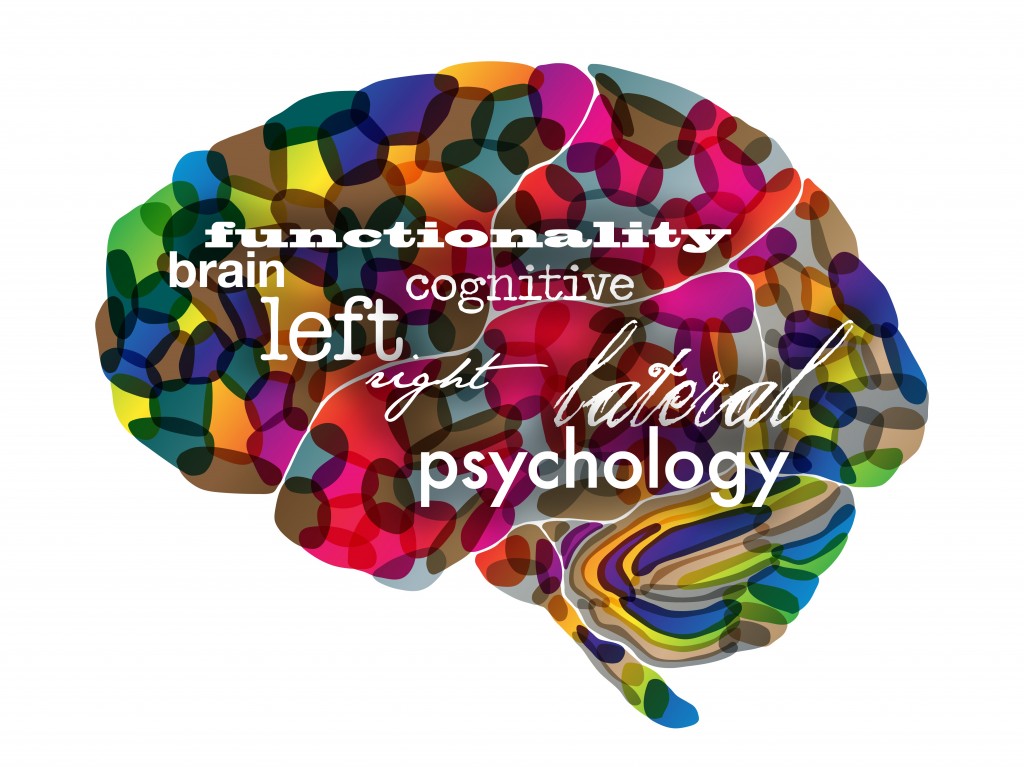
Taking into consideration the theory that our brains function differently from person to person, yet can be categorized into different groupings, we can also divide people into right brained and left brained. This of course is nothing new. The basic understanding of right vs. left brain is that the right brain controls creativity, visual and spacial perception and thinks “big picture” and ideas. The left brain controls logic, maths and sciences and thinks “practical” and reality based solutions.
The right brained tendency
Personally speaking, I have always been categorized by others as a “right brained” person – long before I had an understanding of what that truly meant. I’ve taken the tests online, seen the dancer spinning clockwise and sometimes even counterclockwise. When I wash the dishes, sometimes I stack them neatly and other times I balance them precariously in a pile. But, I can say that I believe I do have a right brained tendency – tendency being the key word.
So, who are right brained people?
There is a lot of theory as to what makes the right brained person tick. According to my go-to source, Wikipedia: “The processing of visual and auditory stimuli, spatial manipulation, facial perception, and artistic ability are represented bilaterally, but may show a right hemisphere superiority.”
Of course, not everyone with a right brained tendency has the same behaviour and thought patterns. The same is true for those with a left brained tendency. Although, there seems to be enough common ground (or mind) that these hemispherical categorizations can and have been made.
What’s the point?
The point is, even with all the research, individuals with a right brained tendency are not that well understood. They don’t typically fit the mold. However, right brained thinkers have contributed to some of the greatest discoveries and creative masterpieces we’ve ever known.
A few likely right brained thinkers
- Thomas Edison
- Michelangelo di Lodovico Buonarroti Simoni
- Pablo Picasso
- Rembrandt Harmenszoon Van Run
- Walt Disney
- Nelson Rockefeller
- Hans Christian Anderson
- Leonardo da Vinci
- Sir Winston Churchill
- Benjamin Franklin
- John F. Kennedy
- Wolfgang Amadeus Mozart
- John Lennon
- Louis Pasteur
- Orville and Wilber Wright
- Alexander Graham Bell
- Ludwig Van Beethoven
- Thomas Jefferson
- George Washington
- Vincent Van Gogh
- Agatha Christie
- Ernest Hemmingway
- Mark Twain
- Anna Roosevelt
- King Gustav IV of Sweden
- Albert Einstein
- Marie and Pierre Curie
- Socrates
- Galileo Galilei
- F. Scott Fitzgerald
- Abraham Lincoln
- Steven Spielberg
Bottom line
Don’t underestimate those right brained people that you know. Perhaps they have more clarity of thought than you realize. And, don’t be surprised when they come up with a really good idea seemingly out of nowhere. I have the privilege to work with some exceptional creative thinkers who have strongly developed right brains. Do you?
What do you think about the theories surrounding right brained psychology?
by Madi Secareanu | Apr 16, 2012 | Advertising, Branding, Business Success, Creative, Interactive, Social Media
There’s no doubt that social media has changed the marketing landscape significantly within the last few years. There’s always something new; a new social networking site this year, a new app tomorrow, a new feature next week, a new enhancement next month…social media is constantly in flux. I think what makes it so successful is not only it’s ability to re-invent itself, but it’s ability to re-invent itself while keeping its core proposition intact – social media, for brands, for marketers, for individuals, helps tell a story.
What is social media storytelling?
The concept of brand storytelling is not a new one; it’s just also been re-invented to social media storytelling. Brands aim to take their consumers on an emotional journey by connecting with them, to create a demand by appealing to a consumer’s wants, needs and desires. That is the essence of social media storytelling. This connection is very important and partly the reason why social media has emerged as the ideal tool to tell the brand story and connect, more personally and more emotionally, with existing and potential customers.

Take a look at the new Facebook Timeline for example; it’s essentially a storyline. A storyline driven by the brand and enhanced by its followers. It’s about generating and amplifying stories, and because of this, timeline helps brands become better storytellers. How does it do this? Well getting people(followers) involved for one, they can help bring their own unique perspective to your brand, and helping facilitate that emotional bond between brand and consumer. But its layout is really what sets its ability to tell a story apart. Timeline speaks to a story about a brand’s history and its present but it’s designed with the future in mind. The bigger emphasis on visuals makes more impact – images often make better stories and the Millstones feature helps highlight important dates and facts that are essential to the brand’s (hi)story.
Pinterest, for example, is based on visuals. It tells a brand story through images, and how far can a brand go if the only images they feature are product images? With Pinterest, brands must show the bigger picture (pun intended). What inspires the brand? What type of lifestyle does the brand fit into? Pinterest is about going beyond the product and about creating a more complete story around a brand, visually.
Let’s not forget Twitter. It’s immediacy has been the reason brands have had such success with it – it helps brands tell quick and interesting stories while connecting with followers on a more personal level. I, for one, love when I tweet about a brand and they immediately acknowledge it by commenting or retweeting – I feel like they care about my story and how it fits into theirs.
Every brand has a story, and social media is here to help tell it in a more engaging way. How do you help contribute to the brand story through social media storytelling?