by Lyndsey Loiacono | Nov 4, 2013 | Design, Latest
Designing Restaurants: It’s the outside that counts.
If there is one thing you should know about me, its that I have a huge obsession with food. Cooking, eating, watching food network, I love it all. Growing up in an Italian family and spending hours sitting around a table might have something to do with it. So when thinking of a good topic to share, I thought it would be best to combine my love with food and my love for designing.
I spent 2 of my best years living in Toronto where there are restaurants every where you turn. What makes Toronto a world class city is the diversity in restaurants, but how do they stand out from one another? It seems now more than ever a restaurants brand is as important, if not more important than the food they serve you. It’s your first impression from the outside that brings people inside. Designing a restaurant logo is only one factor in designing a strong and unique restaurant identity.
Here are some great examples of restaurants that got designing appetite appeal right…. from the outside in!
Weslodge, weslodge.com
This new on-the-scene restaurant in the popular king west area, has been branded as a “modern saloon”, with its impossible to miss canary yellow doors jumping right out at you. The interior is dark and feels like you have walked into a twisted pioneer hunting lodge with taxidermy filling the walls. Its logo has a modern back-woods feel to it and that canary yellow is shown very subtlety through menu design. What I love the most about this restaurant is how it celebrates it’s identity by the use of lights on the logo which separates this place from everything else on King west.

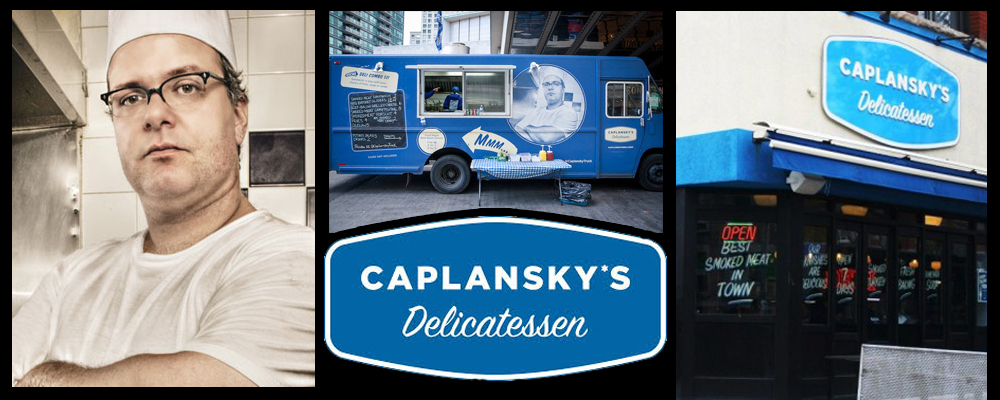
Caplansky’s Delicatessen, caplanskys.com
Oh so retro! Zane Caplansky is his brand as seen on the home page of his website dressed as a 60’s breakfast line cook, and good quality kosher food is his game. But before you go inside this eatery, it’s the outside that catches your attention. The retro throw back look is evident in the logo to the paint and design of the actual building. You feel like your looking back in time when your gazing at this place and in many ways you are. It’s simple yet forceful, establishing the Caplansky brand on the the corner of College and Brunswick for the past several years. To top it off, the Caplanksy food truck is a moving brand machine. Going to private events to food truck cook-offs, the proven look of the restaurant is arguably more powerful as a driving diner along the streets of the GTA.
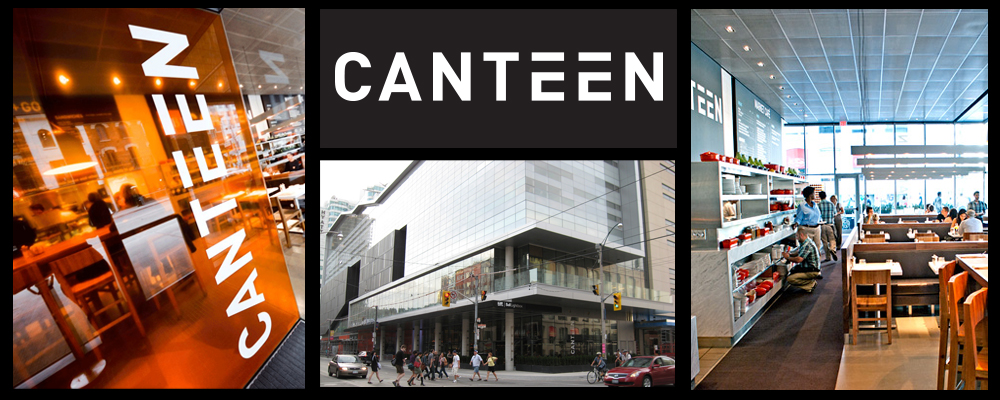
Canteen, oliverbonacini.com
Location, location, location! Ok so were not here to talk about the importance of location, were talking branding. But there is no denying that a superb location is only going to help any company, especially a restaurant, by solidifying it’s brand to the public. Canteen, located in the TIFF building on King street is front and centre in terms of a restaurant establishing it’s identity in the heart of Toronto. The logo itself is what you might call simple. Clean and cut, it makes you think of what a space station eatery might look like but than it’s location in the TIFF building reminds you that this is no ordinary place to eat. The brand is established really by it’s location more than anything. Hollywood meets Toronto for the perfect place to buy an over priced pizza while looking good doing it.
by Maria Mcquire | Nov 4, 2013 | Business Success, Latest, Marketing
No matter what kind of business you have, you need to promote it to profit from it. This rule does not change for automotive business. In order to do this, you can either promote your automotive business with traditional media that are often more costly and time-consuming or you can promote it with the help of online tools. In case you do not know how to promote your automotive business online, here are few tips for you.
Build a website for your automotive business: Today everyone prefers to get information about the product and its pricing along with other relevant details, that’s why it is suggested that you should have a website with updated information about everything that you offer. Also, this website should be convincing. It should be able to attract new customer.
Use Search engines: Most of us in business know how to utilize search engines to our benefit. If you want to promote your online business, then you should use search engine tools as much as possible. In order to do this, you can do search engine optimization evaluation of your website. Promote your automotive website along other related content.
Use Social media: To promote your automotive business you could use a variety of social media websites including Facebook,Twitter, LinkedIn, YouTube and many other similar social media properties. The biggest benefit of this utilizing this approach is that you will not only get access to your existing customer, but you will be able to reach to potential customers as well. More importantly, you can communicate with your customer as well and that will increase your credibility in front of your customer.
Use local directories: There are many online local business directories available on the internet and you can list your business in those online directories. Due to this, people will be able to search your website or your business in automotive section and it can also help you to get more customers for your business and as a result of this you can get more profit for your automotive business.
Write blogs: Experts say that content is the king and you can get a lot of content using blogs. Developing content is a great way to do search engine optimization and you can also stay connected with your customers too! With the help of your blogs you can post ideas, tips, and information and similar other things about the automotive business and this can attract potential customers to your website and your automotive business.
In addition to these tips there are so many other ways that you can use to promote your online business. Make a call to dvla telephone number as well and you can ask help from the driving licensing department to advertise your product or services with a small advertising fee.
by Miriam Hara | Oct 31, 2013 | Latest, Social Media
In today’s competitive market, businesses must get found. Once found they must be perceived as keeping up with the ever-changing business environment. Business content marketing enables businesses to have the right first impression.
Striving for top of mind business and brand awareness is critical within an increasingly fragmented media space. Social Media has allowed everyone to become a publisher of content. So to keep pace within this competitive environment, businesses must publish content.
However, it’s difficult for most businesses that offer services to feel “comfortable” creating content that provides a valuable ROI. Business content marketing is no easy task. More often than not, it requires skill sets that some businesses don’t typically use.
Here’s a 5 step process that will help you maximize your efforts for business content marketing:
- Think about your business.
Yes, this sounds simple. But the actual process of writing down the services you offer and why clients should choose your business will help provide you with a business platform. This platform will be the basis for all your business content creation.
- Think about your sales process.
What are the concerns and questions that your potential clients and customers ask? What are the major roadblocks that your sales process currently faces? Often, the day-to-day sales operations offer a wealth of relevant subject material. When broken down, it can provide content creation ideas. It has been my experience that just one question can garner two or three different content references on the same subject.
- Find the key phrases and keywords.
Within the questions that potential clients ask, there are a substantial number of keywords that you can access for search engine efficiency. Armed with these keywords or key phrases, assess them with Google Keyword Planner or other keyword search tools. Google Keyword Planner, or Market Samurai (which is the one 3H uses), provide information on monthly keyword searches as well as other related, relevant keywords on the subject. Choose a maximum of five words to be included in each article written.
- Hire a writer to create content.
It is essential to have a well written article to place your business above that of your competition. It’s about all about establishing credibility and expertise. Remember to enrich business content creation with keywords to increase the efficiency of your efforts. Not only will you be providing good content, but you’ll be adding strength to your SEO initiatives. In order to create relevant business content that also promotes SEO, hire a professional.
- Double up on your efforts.
Make sure that the article written aims to establish a rapport with those reading your business content. Lastly, be sure to include a call to action at the end of each article. This will aid in lead generation and creating an integrated sales approach.
So here’s my call to action: I would like to invite you to download some of my “quick read” ebooks: Branding Understood, Social Media Understood or Marketing Understood. I look forward to hearing what you think!
by Lisa Wedmann | Oct 31, 2013 | Advertising, Latest
Advertising frequency is a huge component in the success of any campaign. Think about it: How many times do you need to hear a phone number in order to remember? Don’t answer… it’s a trick question. I have most of my numbers stored in my phone. Not sure about you but I don’t need to repeat phone numbers in order to remember. When I lose my phone or lose my contacts I am in big trouble.
In terms of new advertising and increasing awareness, most people need to repeat or hear an ad or communication three times before it registers. You can test it yourself. Take a name for example. A name that is not a person you know. Like Ryan Clarke. Repeat that name out loud three times. Chances are you will remember…at least in the short term.
Next week rolls around and you might not remember the name. But, if you see Ryan Clarke’s name repeated on Facebook, or an email comes around with this name on it , you might remember the name. Then you might forget … then again you might remember. That’s how building brand awareness works.
Effective Advertising Frequency
In marketing and in advertising, the number of times information is repeated before action is taken is called effective frequency.
There are many theories on what is the proper or correct advertising frequency you should aim for. The number of times you should repeat your information to your target audience is an important factor in the success of any advertising campaign.
There are many marketing theories on how and what strategies should be employed. Get to marketers in a room and each will think that their opinion is the best approach. But where they all agree is that advertising frequency is a must, the information or communications message must be repeated.
It’s not enough to run your ad up the flagpole and assume that your target market will drop everything and salute. Your ad isn’t on a flagpole and really, ads aren’t akin to patriotism. Repeat, repeat, repeat and your message will stick.
The first part of the above statement is obvious. Your message must be heard numerous times before your customer takes action. Marketing of any brand to build awareness must be an ongoing continuous effort in order to be successful.
The second part of the statement is not so obvious, unless you are a seasoned marketing professional. The matter of your messaging sticking is about creative approach, brand persona, media placement and creative strategy.
Approach your customer from different angles. Repeat the same message but repeat it on different channels. Think print, packaging, TV, radio, social media, events, pr and…
I can’t repeat that too many times.
Repeat uniquely, repeat creatively, repeat strategically. Then, your message will stick and your brand awareness rise to the top of the flagpole.
by Miriam Hara | Oct 28, 2013 | Branding, Business Success, Latest, Social Media
What is content marketing and how does it apply to building business and brand? A good way to start this conversation would be to reference the Janet Jackson song: “What have you done for me lately?”. Content marketing involves imparting information and knowledge with no expectation of return. In other words, it’s about giving back. Really? Really!
How do businesses go from a mindset of selling to one of guidance with no real concrete ROI? We all hear a lot about business relationships today. Business relationships have always been at the cornerstone of business success. What has evolved is how these relationships are being built today.
- It’s all about Google.
Gone are the days of brochure websites. Now websites need to perform by offering fresh and current information to get on the Google radar – that’s a good thing. The benefit of getting on the Google radar is that you’ll see your website rank go up. Content marketing assists in doing just that. Essentially you want your business to get found by your target when they are looking for your product or service. And there’s a strategy to developing this content, however that will be for another post.
- Websites are the first impression.
You know the old sales adage, “get your foot in the door”? That hasn’t changed over time. Although now a website is the window to building sales. Leveraging knowledge just makes sense. Having forums and relevant content on your site adds credibility. (See my recent post on Websites 2013: Maximizing Performance). And rather than you calling, with the hopes of turning that cold call into a warm call, prospects can and will reach out to you. So to completely leverage that content, be sure to have a prominent and visible “contact us” mechanism.
- Spread the word and increase your reach.
Content creation is a lot of work. And you need to keep updating the content on your website. So it is important to maximize the footprint of each “knowledge bite” your business imparts. Equally important is sharing it on social media platforms that link back to you site. (ie: LinkedIn, LinkedIn Groups, Digg It, StumbleUpon). Continuous momentum of content marketing will start establishing your business by building the foundation for forming relationships.
Everyday there’s something new in the social media arena (or at least it feels like it). Understandably, it’s hard for businesses to keep up in the quick evolving nature of the marketing landscape. Couple the speed of this evolution with the lack of real expertise to navigate through these changes and businesses are finding themselves in a very challenging position. But challenges have always been what marketing has been about. Are you up for the challenge?
by Lisa Wedmann | Oct 25, 2013 | Advertising, Branding, Business Success, Communications, Latest, Marketing, PR, Social Media
As social media continues to change marketing landscape, one change I have seen is the convergence of marketing with PR. In the past, if you wanted an advertising campaign, you produced commercials, print ads and maybe some billboards.
If you wanted a Public Relations campaign, you used some of the more traditional tactics: a press conference, sent out a press release to media, product placement and TV appearances.
But today, marketing and Public Relations are closer than ever. No more can you launch a great product, with a big ad campaign, and talk TO the consumer.
You have to take it one step beyond that and bring the product to the people, get it in their hands, and talk with them – not AT them.
The overarching goals of Marketing and PR are the same: get people’s attention, get people to connect with, to talk about and, ultimately, buy your product. And finally, perhaps most importantly, it’s about building brand awareness and loyalty.
But that is where the similarity ends. Marketing is about speaking to the consumer. PR today is about speaking with the public and creating a two-way dialogue. With the growth of social media, and the changing landscape of traditional media, power has shifted to the consumer. It’s not enough to speak loudly and blanket the airwaves with ads.
And even if you do blanket the airwaves, finding that target market is increasingly difficult as more and more people are turning out traditional channels, and the media landscaped continues to fracture. In 2012, one in 50 Canadian TV subscribers cancelled cable in 2012, and 130,000 are expected to follow suit by the end of 2013. And Netflix subscriptions are growing, as is the use of PVR – meaning no more commercials!
This is just where PR comes in. A good PR campaign can get the word out to increasingly niche target markets using a mix of tactics: events, blogger campaigns, product placement, media appearances and social media campaigns. Done right, the message will get out to just the right markets and people, creating buzz, awareness, a relationship with the customer, and, ultimately, sales.
There are multiple benefits to a public relations campaign, including:
- Relationships – A blogging campaign will create brand ambassadors, consumers who will talk about your product, and share this with their followers. They will blog, and share about your product, with links back to your website. This also fits in nicely with social media.
- Social Media: Obviously, thanks to the blogger campaign, your followers will grow, and you will connect with new fans and followers. Once bloggers post, and share, their blogs, you can repost on your page, and retweet their tweets. This provides a gateway to new followers, and consumers.
- SEO: Do you produce your website to maximize SEO? A PR campaign will improve your online presence, with links back to the site, which will help the site ranking.
How do you think Public Relations has changed? How does it fit within the marketing mix?